The idea behind the accessory
UniqueYou began in 2014 with scarves and clothing. Its history includes a pause and a return after the domain was recovered, rather than an uninterrupted run. That distinction matters because a good recommendation should describe a brand as it is known, not fill gaps in its story with a smoother narrative. The original brown wordmark, horse motif, and “Since 2014” detail provide a recognizable identity; the neutral taupe palette keeps the visual setting quiet enough for scarf colors and patterns to take the lead.
The brand’s accessible, elegant approach makes most sense when a scarf is treated as a companion to existing clothes. You need not invent a new personal style to wear one. A person who already favors simple shirts might add a square scarf at the collar; someone devoted to long coats might prefer the easy line of a wrap or shawl. Begin with the garments you reach for repeatedly. An accessory earns its place when it makes those garments more useful, more expressive, or simply more enjoyable to put on.
Start with a wardrobe, not a wish list
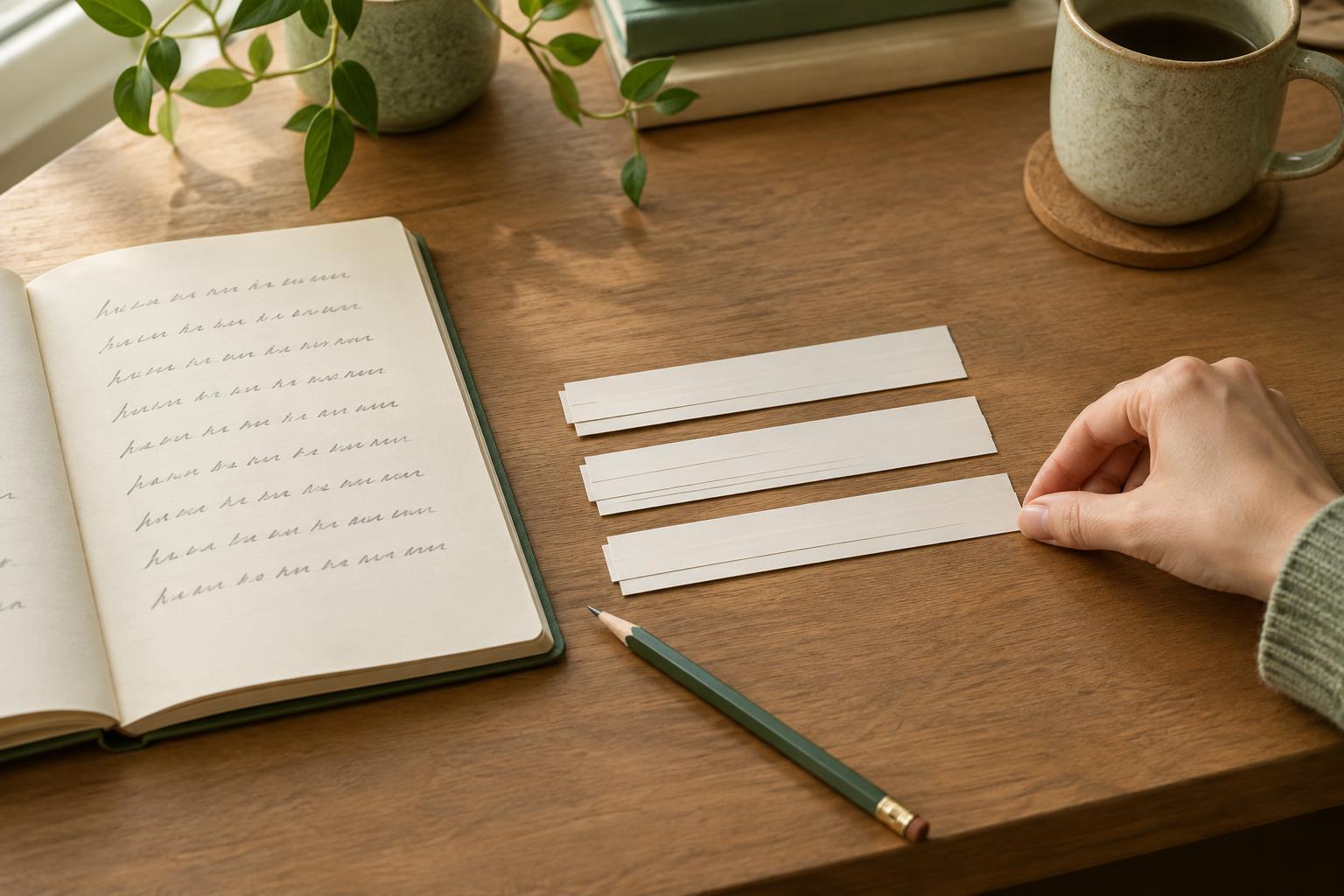
Before choosing a color or material, lay out three outfits you actually wear: perhaps a weekday combination, a relaxed weekend outfit, and the coat you use most often. Notice which necklines leave room for a knot, which jackets already have bulky collars, and whether your usual colors are warm, cool, muted, or bright. Then ask what is missing. A light scarf might supply a soft transition between a dark coat and a pale top; a stronger shade might give a neutral outfit a deliberate focal point.
This small exercise is more reliable than buying for an imagined occasion. If most of your clothes are patterned, a quieter scarf may be easier to combine. If the wardrobe is largely plain, a print can create variety without requiring new garments. Look at the shoes and bags you already use, too, but do not force an exact color match. An accessory can echo a minor shade, balance a dominant one, or offer contrast. The aim is a relationship among pieces, not a uniform assembled from identical tones.
Choose a shape that suits the job
A square scarf is particularly adaptable because its fold changes its apparent width. Fold it into a narrow band for a neat neck accent, leave more fabric visible for a softer triangle, or tie it to a bag when an outfit needs color away from the face. The exact effect depends on the dimensions and fabric of the individual piece, so consider how much volume you want before imagining a particular knot. A compact style and a generous square can perform very different roles even when both are described as scarves.
Long scarves draw the eye vertically when their ends hang loose, while a shawl or wrap can place more fabric across the shoulders. That difference is useful when thinking about a coat with a high collar or an evening outfit with an open neckline. Ask whether you want warmth, a decorative line, or flexible coverage. If you mainly want a small accent, extra volume may get in the way; if you plan to drape the fabric over your shoulders, a narrow piece may not do enough. Choose the form for its intended use, then consider color.
Read material descriptions carefully
UniqueYou includes silk, cashmere, and wool categories, but a category name is not a substitute for the composition of a particular item. Check each product’s stated materials rather than assuming every scarf in a group has the same fiber content. Also consider what you want against your skin. A fabric’s texture, weight, weave, and finish influence how it folds and feels; two scarves associated with the same material can behave differently. When the available description leaves an important question unanswered, it is better to pause than to guess.
Think in terms of use as well as fiber. A scarf intended for a crisp collar accent needs to hold a manageable fold; one meant for a relaxed shoulder drape should fall in a way you like. For colder days, consider how a wool or cashmere-category option would sit with your outerwear, without treating the material label as a guarantee of warmth or softness. For lighter styling, look at whether the fabric will feel comfortable in your usual setting. Product-specific details should settle the final decision, especially when you have particular sensitivities or care requirements.
Let color make a clear point
Color can do several jobs at once: repeat an existing shade, soften a strong contrast, or create a new focal point. A deep red scarf beside navy or charcoal reads differently from the same red beside cream. Brown can continue the warmth of camel and olive, while a black scarf can make a pale shirt feel more graphic. Try placing the candidate color near your face and beside the coat or jacket you expect to wear it with. Looking at both contexts helps distinguish a shade you admire from one you will actually use.
If a vivid color feels like too much, try giving it less space. A small exposed fold at the neckline can be enough; the same color spread across the shoulders will have a much stronger effect. Conversely, a neutral scarf need not disappear. Contrast in texture, a border, or the way the fabric catches light can give quiet colors definition. Think of color as punctuation: an exclamation point is useful occasionally, but a well-placed comma may serve an everyday outfit better. The best choice depends on how much attention you want the accessory to hold.
Make patterns cooperate with your clothes
Pattern mixing becomes easier when you give the eye one point of agreement. A striped scarf can work with a patterned blouse if the two share a color and have different visual scales; a busy print beside another busy print may compete unless one is mostly concealed. Lay the pieces together in daylight if possible, then step back. At a distance, do they read as one outfit with a clear focus, or as several separate ideas asking for attention? You can often improve the balance simply by changing how much scarf is visible.
Do not overlook the border of a square scarf. Folding can bring a border to the front and hide much of the central print, producing a quieter result than the full design suggests. Similarly, a large scarf may reveal different portions of its pattern as it moves. If you usually wear plain tops, that variety can be welcome; if your wardrobe already has many prints, a simpler surface may prove more versatile. Practical versatility means more than a claim that something “goes with everything.” It means you can name several outfits in which you would enjoy wearing it.
Style for movement, not just a mirror
A knot that looks elegant while standing still may feel awkward after an hour. Test the scarf with the jacket, collar, and bag you actually use. A loose drape can be appealing but may need adjusting when you move; a close knot may feel tidy yet crowd an already high neckline. Try tying a square scarf once rather than winding it repeatedly, or leave a longer scarf open to keep the line of a coat visible. Small changes in fold and placement often matter more than an elaborate technique.
It helps to decide where the outfit’s focal point belongs. At the neck, a scarf draws attention toward the face; over the shoulders, it can change the outline of the whole look; on a bag, it offers a modest accent without affecting comfort around the collar. When dressing for a full day, notice whether you will need to remove layers indoors and whether the scarf remains useful when you do. A satisfying styling choice should survive ordinary movement and changing rooms, not only the first glance in a mirror.
Give a scarf with the recipient in mind
Scarves make appealing gifts partly because there are several ways to wear them, but flexibility should not replace attention to the recipient. Observe the colors they repeat, the coats they favor, and whether they tend to wear accessories close to the neck. Someone who regularly chooses soft neutrals may appreciate a related shade more than an adventurous print chosen for its novelty. A friend who already enjoys colorful squares may welcome a bolder design. The question is not what you would wear, but what would feel at home among their belongings.
Material and scale deserve the same care as color. If you know someone has preferences about texture, check the item’s composition and care information rather than relying on a category label. If they seldom wear bulky layers, a large wrap might be less useful than a smaller scarf; if they like shoulder coverage, the opposite may be true. When uncertain, choose a piece that relates to one or two outfits you have seen them enjoy. A gift feels personal when its reasoning is specific, even if the design itself is understated.
Keep the choice useful after purchase
Before committing, imagine the scarf on an ordinary Tuesday rather than only at a special event. Can you picture how you would fold it, what you would pair it with, and where you would put it when it is not being worn? Check the individual item’s size, composition, and care guidance so that its practical demands suit your habits. Proper care depends on the particular product; a familiar material name does not tell the whole story. Keeping scarves accessible and visible can also help you remember the combinations that made you choose them.
A useful final test is to describe the scarf in one plain sentence: “This will brighten my dark coat,” or “This will add a soft layer to my simple dresses.” If the sentence depends on vague hopes that you will eventually change your wardrobe, reconsider. UniqueYou is most compelling as a source of accessories for clothes already in circulation. That grounded approach leaves room for personality without asking every new piece to transform your style. A scarf can be distinctive and still feel like it belongs to the person wearing it.
A guide to the regional and language versions
UniqueYou has 20 regional domains, 21 regional-language versions, and 16 distinct languages. Those numbers differ because countries may share a language, while one country may offer more than one version. The United Arab Emirates has an Arabic-language root and an English-language /en version on the same domain. The entries below identify the destination language before each route and describe what sort of page it leads to. Use the version that makes product details easiest for you to read, then check the particulars of any item that catches your eye.
Poland — Polish
For the Polish-language starting page, use the brand route — UniqueYou. If a generous scarf shape is the starting point, the Polish term for a large scarf leads to the relevant collection — chusta duża. For a narrower color-led search, the Polish-language brand route to burgundy scarves is — UniqueYou. Compare the scale and shade of any candidate with a coat you wear often.
Germany — German
The German-language brand home is — UniqueYou. To explore the collection described by the German term for a cloth or scarf, use — tuch. Another German-language brand route leads to neck scarves — UniqueYou. A close-to-the-neck accent and a broader shoulder drape solve different styling problems, so decide which role your wardrobe needs before judging a design on color alone.
Czechia — Czech
For the Czech-language home page, follow the brand route — UniqueYou. The Czech term for a black scarf takes you to that color collection — šála černá. A separate Czech-language brand route leads to the cashmere scarf category — UniqueYou. Black may create a clean line against a light coat; for a material-led choice, check the composition of the individual item rather than relying only on its collection name.
Spain — Spanish
The Spanish-language brand home is — UniqueYou. If you are thinking about tying fabric around the head or hair, the Spanish local term leads to that collection — pañuelo pelo. The Spanish-language brand route for scarves is — UniqueYou. Consider whether the accessory needs to stay comfortable through movement: a head styling idea and a long scarf worn with a jacket call for different shapes and folds.
France — French
Begin at the French-language brand page — UniqueYou. For a material-led search, the French local term points to the cashmere scarf collection — echarpe cachemire. The French-language brand route to red scarves is — UniqueYou. A red accent can look restrained when only a small fold shows at the collar; if material is your priority, read the selected item’s details before deciding how it will fit your plans.
Hungary — Hungarian
For the Hungarian-language home page, the local description of a scarf-and-shawl brand leads here — sál- és kendőmárka. The Hungarian-language UniqueYou route to the cashmere scarf category is — UniqueYou. If you are comparing a scarf with a shawl as a gift, start with how the recipient wears layers: a compact neck accent may suit one person, while shoulder coverage may matter more to another.
Italy — Italian
The Italian-language local term for a scarf shop takes you to the home page — negozio di foulard. For a color-specific route, the Italian-language UniqueYou link leads to brown scarves — UniqueYou. Brown can be especially useful when a wardrobe already includes cream, olive, or camel, but compare actual shades rather than assuming all browns work alike. Decide whether the scarf should blend gently with those pieces or create visible contrast.
Romania — Romanian
Use the Romanian-language brand home to start broadly — UniqueYou. The Romanian local term for shawls points to that collection — saluri. For a color-led alternative, the Romanian-language brand route leads to red scarves — UniqueYou. A shawl can change the outline of an outfit, whereas a smaller red accent may simply bring color toward the face; choose according to the effect you want.
Slovakia — Slovak
The Slovak-language brand starting page is — UniqueYou. The Slovak term for a cashmere scarf leads to that collection — kašmírový šál. Another Slovak-language brand route points to square scarves — UniqueYou. Think about whether you want a material-led option for layering or a shape that can be folded into several neck styles, and confirm the details of any individual piece before making the comparison.
Finland — Finnish
For the Finnish-language home page, the local phrase about finding shawls online leads here — hartiahuivit netistä. The Finnish-language UniqueYou route then opens the scarves collection — UniqueYou. A shawl may be worth considering when shoulder coverage is the aim; a scarf may be simpler to combine with a coat. Let the clothes you already use decide how much fabric and volume would be helpful.
Sweden — Swedish
The Swedish-language brand home is — UniqueYou. The Swedish local phrase for elegant brown scarves leads to that color collection — eleganta bruna halsdukar. The Swedish-language brand route to red scarves is — UniqueYou. These two color directions can play very different roles: brown may extend a warm neutral palette, while red can mark the focal point of a quiet outfit. Compare both against your usual outerwear.
Denmark — Danish
For the Danish-language home page, the local phrase describing a shawl shop points here — butik med sjaler. The Danish-language UniqueYou route to wool scarves is — UniqueYou. If you are looking for a layer to wear with a coat, assess the scarf’s dimensions and the individual product description as carefully as the material category. Too much fabric at a high collar can be less practical than a simpler fold.
Belgium — Dutch
The Dutch-language brand home for Belgium is — UniqueYou. The Dutch local term for a striped scarf leads to the striped collection — sjaal met streepjes. The Dutch-language brand route to wool scarves is — UniqueYou. Stripes can add structure to plain clothes, particularly when their scale differs from any pattern already in the outfit. For a wool-category choice, check the selected item’s composition and care information.
Austria — German
For Austria, the German-language local phrase describing a cashmere-scarf shop leads to the home page — Shop für Kaschmirschals. The German-language UniqueYou route to red scarves is — UniqueYou. These are useful starting points for different questions: one begins with an interest in material, the other with color. In either case, picture the scarf beside the coat or knitwear it would most often accompany.
Netherlands — Dutch
The Dutch-language local phrase for a women’s scarf shop leads to the home page — winkel voor damessjaals. The Dutch-language UniqueYou route to light scarves is — UniqueYou. A lighter-looking accessory can break up a dark outfit without becoming its loudest element. Check the individual piece’s color, dimensions, and material description, then consider whether it works with several familiar outfits rather than just one imagined look.
United States — English
For the English-language home page in the United States, the local phrase for a square-scarf shop points here — square scarf shop. The English-language UniqueYou route to silk scarves is — UniqueYou. A square shape invites folding and tying, while a silk category offers a material-led way to browse. Check the individual scarf’s size and composition before deciding how it would sit at your neckline.
United Arab Emirates — Arabic
The root destination for the United Arab Emirates is in Arabic. The Arabic local phrase describing a cashmere-scarf shop takes you to that home page — متجر أوشحة كشمير. If you are choosing a scarf for a particular outfit, compare its intended coverage and color with the layers you already wear, and use the item’s own description to verify material details. The English-language version has a separate entry below.
United Arab Emirates — English
For the English-language version in the United Arab Emirates, use the dedicated brand route — UniqueYou. This is the /en version rather than the Arabic-language root. Reading in a language you find comfortable can make it easier to check dimensions, composition, and care notes. Once those essentials are clear, judge the scarf against the colors and silhouettes already present in your wardrobe.
Ireland — English
The English-language home page for Ireland is reached through the local phrase for a square-scarf shop — square scarf shop. The English-language UniqueYou route to shawls is — UniqueYou. If you are deciding between these shapes, think about placement: a square can frame a neckline or accent a bag, while a shawl is more likely to change the line across your shoulders. Choose the job first, then the pattern.
United Kingdom — English
Begin with the English-language brand home for the United Kingdom — UniqueYou. To explore small neck scarves, the English local term leads to the relevant collection — neckerchiefs. The English-language brand route to cashmere shawls is — UniqueYou. A neat neck detail and a larger shoulder layer have very different effects, so compare their likely use with the collars, jackets, and dresses you already own.
Portugal — Portuguese
For the Portuguese-language home page, the local phrase for a scarf shop leads here — loja de écharpes. The Portuguese-language UniqueYou route to red scarves is — UniqueYou. Red might be a lively contrast beside navy or a warmer accent beside cream; try to imagine the amount of color that would actually show when the scarf is worn. A small fold can make a striking shade feel easy to use.
The most rewarding scarf choice is usually the one you can already imagine wearing. Start with a familiar outfit, decide what the accessory should add, and let the individual piece’s details guide the final choice.