Find the claim before the disagreement
A persuasive essay rarely moves in a straight line from claim to conclusion. A writer may pause to grant a point to someone who disagrees, describe an objection, and then explain why the original claim still stands. To read that passage closely, begin by stating the essay’s main claim in your own words. What does the writer want you to accept or do? Keep that answer nearby as you read the apparent detour.
Imagine an essay arguing that a school should keep its library open after classes end. The writer might say that extending the hours would cost money. That sentence matters, but it is not necessarily a change of position. Its role becomes clearer when you ask what follows: Does the writer narrow the proposal, offer a way to manage the cost, or argue that the benefit is worth it? The movement from objection to answer reveals how the essay builds its case.
Separate the concession from the counterargument
A concession grants some truth, value, or force to an opposing point. In the library example, the writer might concede that staff cannot be expected to work unlimited hours. A counterargument is the challenge to the main claim: the extra expense or staffing need is a reason not to extend library hours. The two can appear in the same sentence, but they do different jobs. One acknowledges something; the other gives readers a reason to doubt the proposal.
Signal words such as “although,” “admittedly,” and “to be sure” can introduce a concession. Phrases such as “critics may argue” can introduce a counterargument. Treat these as clues, not guarantees. A writer may state an objection without a signal phrase, or use “although” simply to contrast two observations. Instead of labeling a passage from its first word, read through the next few sentences and ask which position each one supports.
Pay attention to the size of the concession. “Staffing would require planning” grants less than “the school cannot afford any additional staffing.” A careful writer may accept a limited concern while resisting a broader conclusion. A careful reader notices that boundary rather than treating every acknowledgment as agreement with the entire opposing case.
Trace what the writer does next
The reply to a counterargument is often called a rebuttal, but replies take several forms. A writer might challenge an assumption, propose a compromise, limit the claim, or argue that one consideration matters more than another. For example: “Keeping the library open every evening would strain the budget. Opening it two evenings a week, however, would give students a quiet place to work without requiring daily staffing.” The second sentence does not prove the plan is affordable. It changes the scope of the proposal and offers a possible answer to the cost objection.
Read the objection and reply as a pair. First, put the objection in the form “This proposal may fail because…” Then put the reply in the form “The writer answers by…” If those two statements do not connect, the writer may have shifted topics rather than answered the concern. A reply about how much students enjoy the library, for instance, does not by itself resolve a question about who will supervise it.
Also notice what happens after the reply. Does the writer return to the original claim unchanged, or state a more modest version? A concession can make an argument more precise. If the essay ends by recommending a short trial rather than permanent extended hours, that change is part of its reasoning, not a detail to skip.
Test whether the opposing view gets a fair hearing
Acknowledging an objection does not automatically make an argument strong. Ask whether the writer presents a concern that a reasonable opponent might actually hold. “Some people simply dislike libraries” would be a weak substitute for a specific concern about staffing, access, or cost. A vague or exaggerated objection is easier to dismiss, but answering it tells you less about the proposal.
Then compare the strength of the objection with the strength of the reply. If the writer says extra hours would require supervision, “students deserve support” expresses a worthwhile aim but leaves the practical question open. A stronger reply would address supervision directly, perhaps by proposing limited hours with staff already on site. You need not decide whether that plan would work in a particular school to see that it meets the objection more directly.
Finally, watch for certainty that outruns the argument. Words such as “may,” “could,” and “under these conditions” can show that a writer recognizes limits. They can also conceal a missing step if no conditions are specified. Close reading means asking what has been established on the page, not filling gaps with facts the essay has not supplied.
Try a three-part annotation
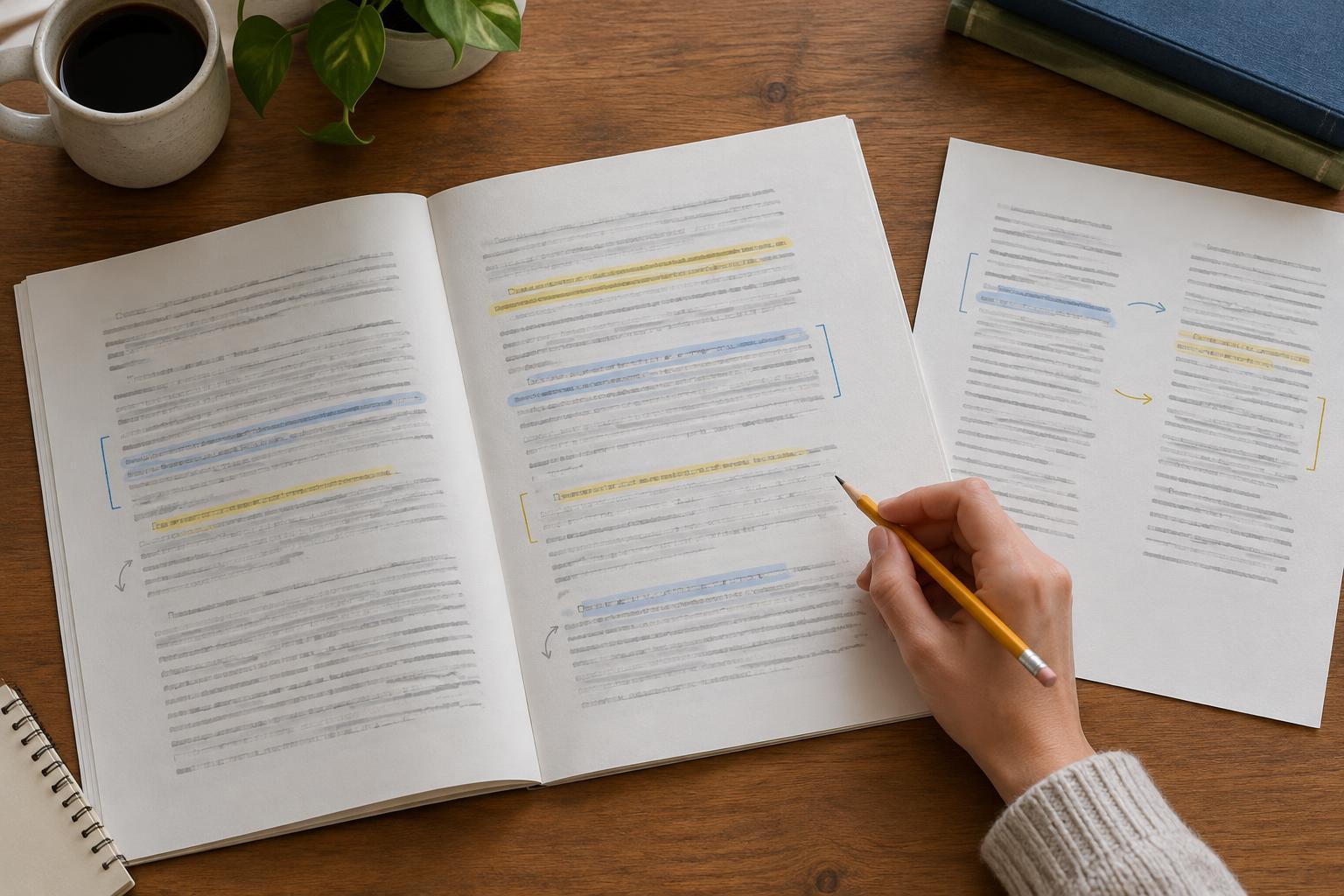
Choose a paragraph in a persuasive essay that begins to discuss a competing view. In the margin or in your notes, write three short labels: “granted point,” “challenge to the claim,” and “writer’s reply.” Copy or paraphrase the words that fit each label. If one label remains empty, do not force it; the writer may have acknowledged a concern without answering it, or answered an objection introduced earlier.
Finish with two questions: “What part of the original claim survives?” and “What concern remains?” Those questions keep you from treating a concession as defeat or a rebuttal as automatic victory. They also make it easier to explain an essay’s reasoning accurately: not just what the writer believes, but how the writer handles a reader’s reason to hesitate.