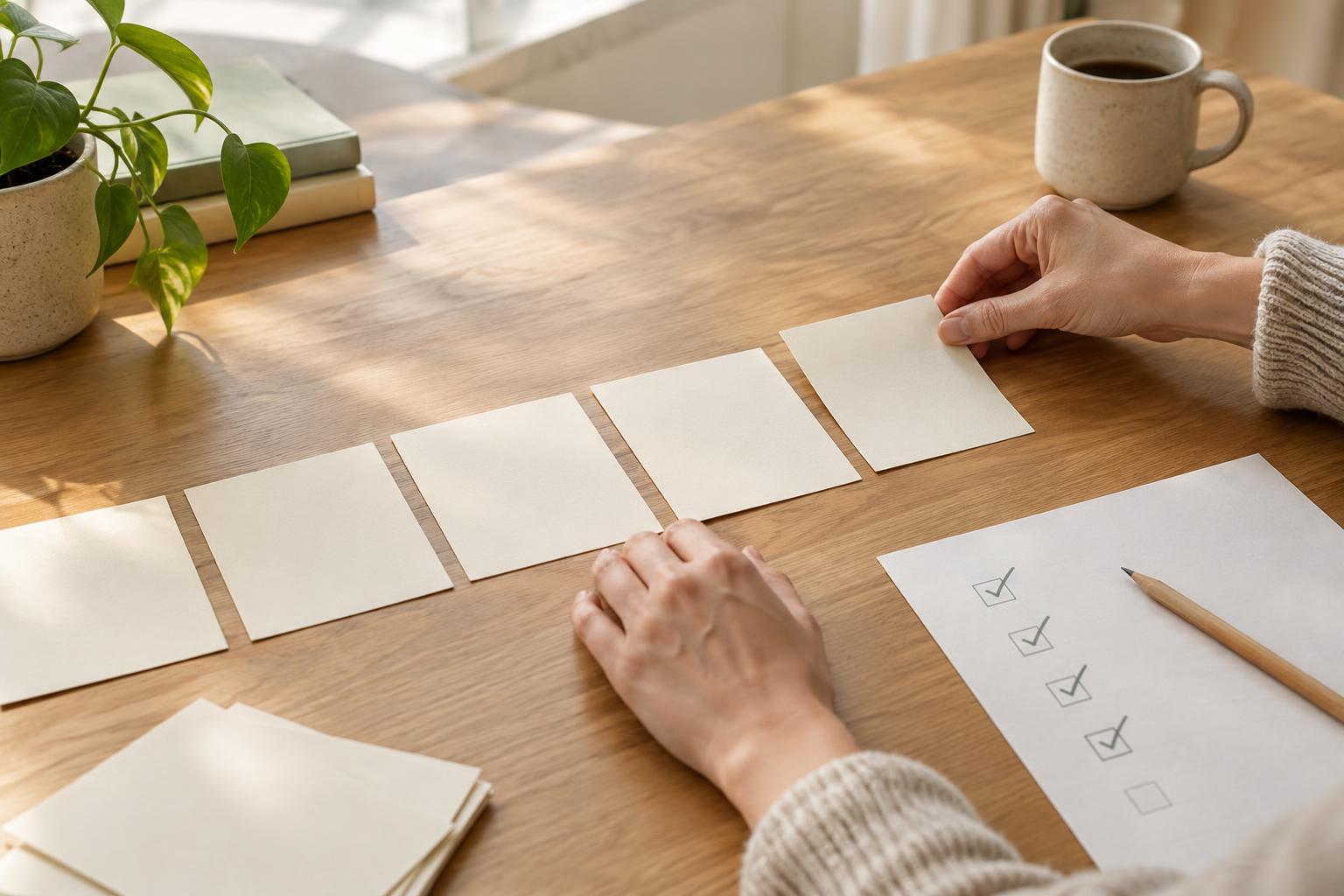
Editing and ClarityClear instructions do more than name the right actions. They show readers what to do first, what to check, and how to handle a choice. Use this practical editing pass to make a process easier to follow.
Read article · 4 min↗
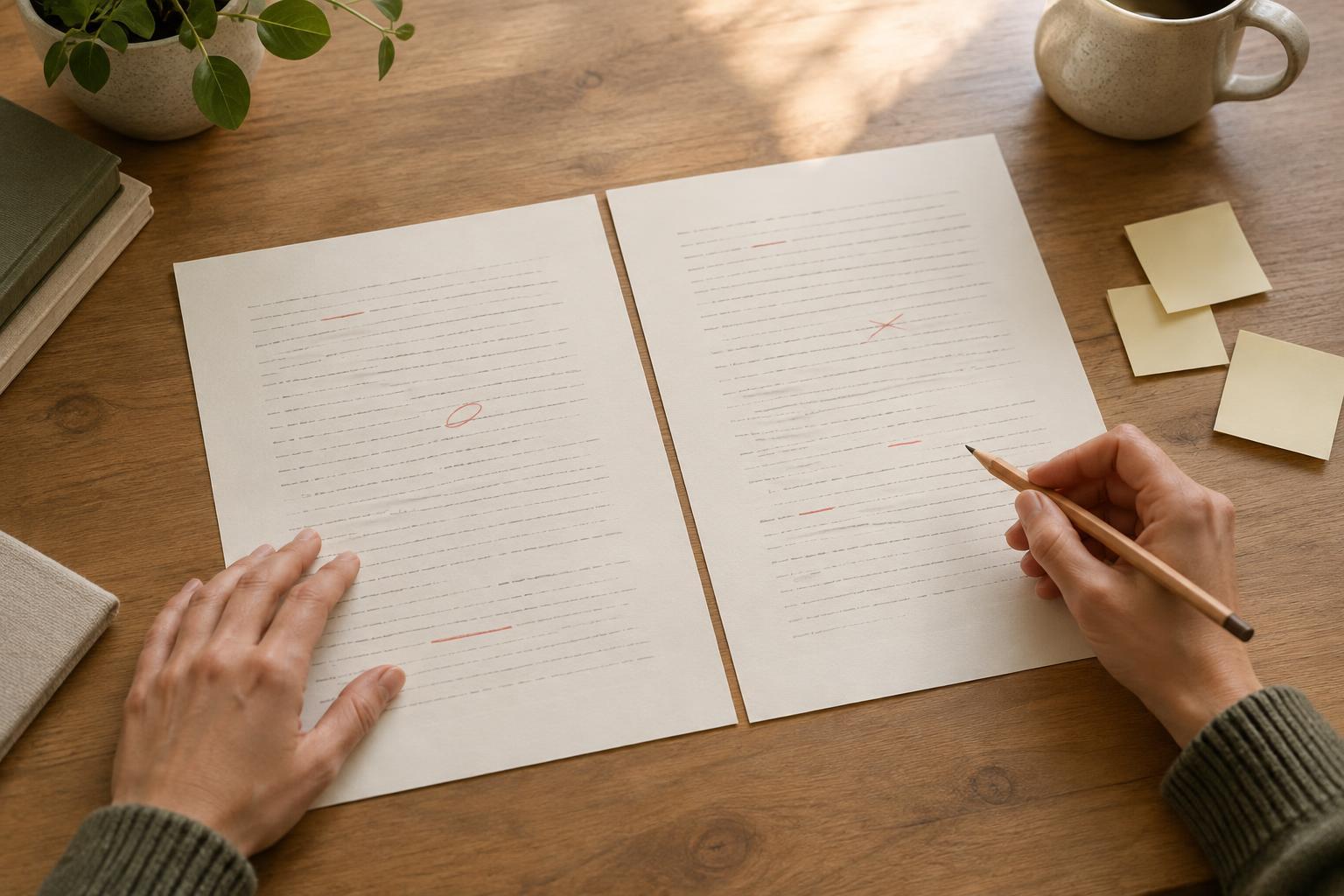
Editing and ClarityEditorial feedback can make a draft clearer without taking it away from its writer. Learn how to identify the problem behind a comment, test suggested changes, handle conflicting notes, and decide what to keep.
Read article · 4 min↗
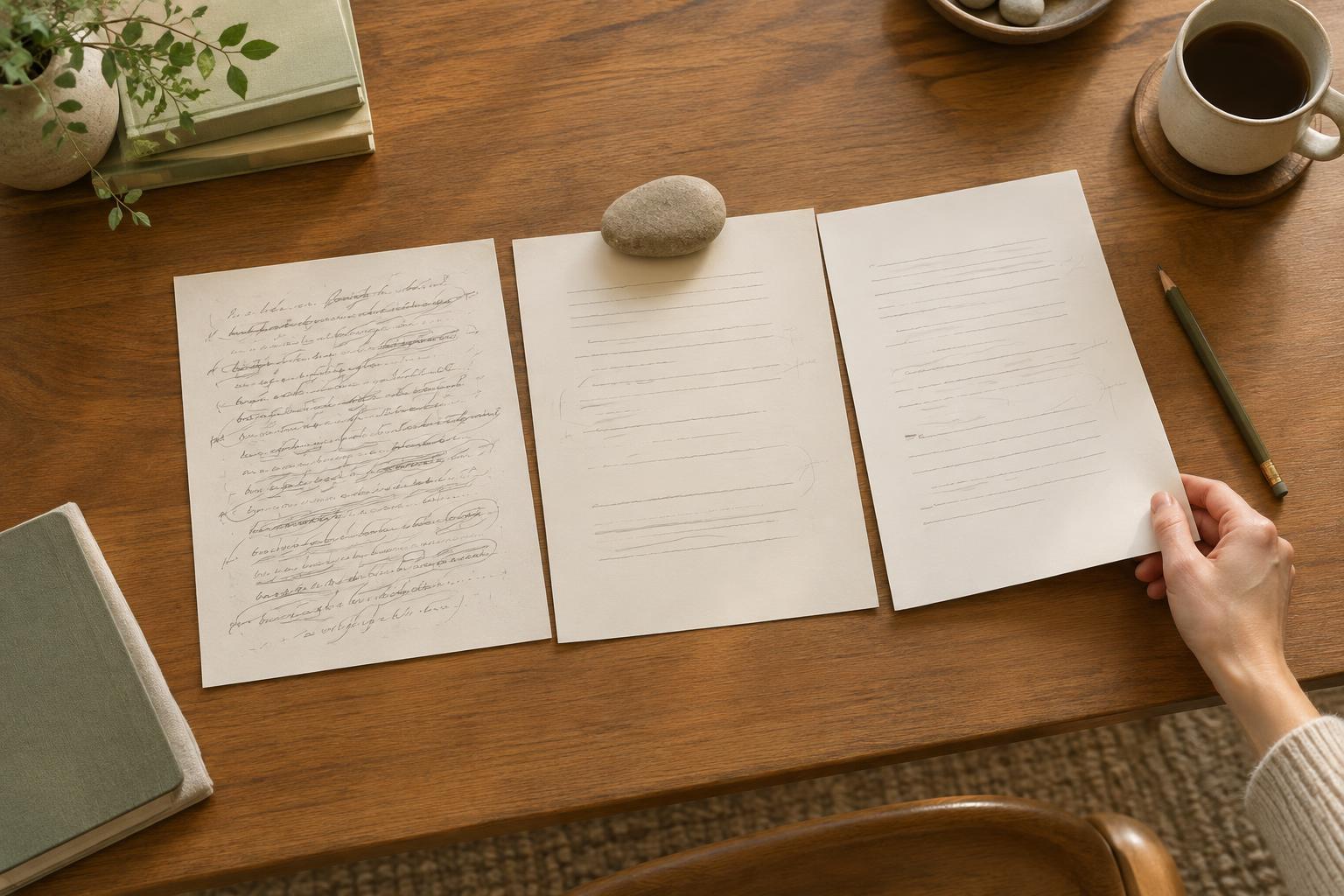
Editing and ClarityA message can stay firm, honest, and useful while sounding different to different readers. Learn how to identify what must remain unchanged, adjust tone through word choice and structure, and check that your revision still says what you mean.
Read article · 4 min↗
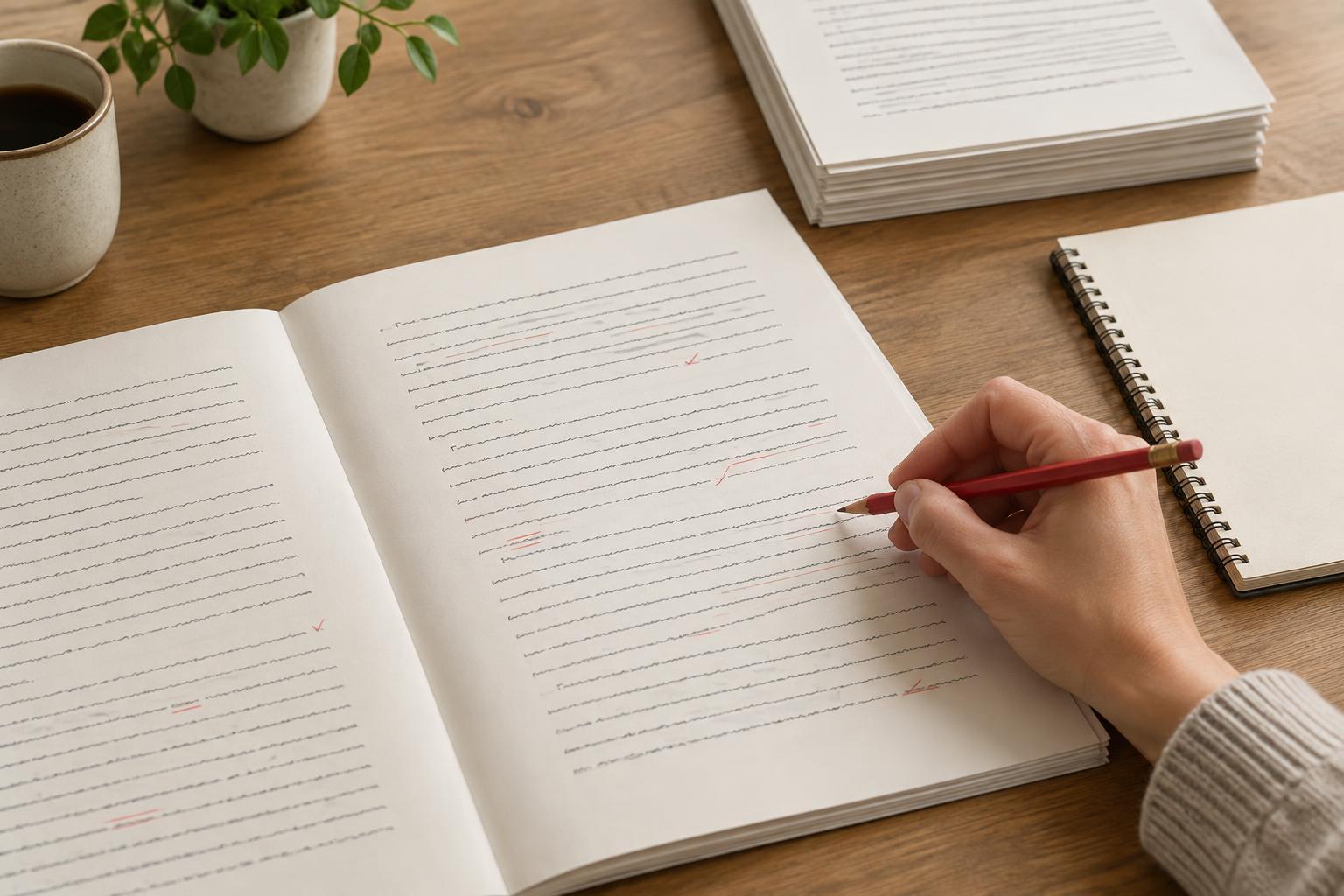
Editing and ClaritySmall differences in spelling, capitals, and formatting can distract readers even when every sentence makes sense. Learn how to set a few style rules, spot variations, and make a final consistency pass without flattening your voice.
Read article · 4 min↗

Editing and ClarityReading aloud can reveal sentences that look fine on the page but feel difficult to follow. Learn how to listen for stumbling points, unclear references, crowded sentences, and rhythms that work against your meaning.
Read article · 4 min↗
Editing and ClarityProofreading works best when it has a narrow purpose. This repeatable pass helps you catch misspellings, duplicated words, and the small omissions that a spellchecker may miss.
Read article · 4 min↗
Editing and ClarityA comma can do more than mark a pause. Learn to use commas where they help readers see a sentence’s structure, distinguish essential details from extra information, and avoid reading a phrase the wrong way.
Read article · 4 min↗
Editing and ClarityRepetition can guide a reader, give an idea weight, or make a sentence memorable. It can also slow a passage down. Learn how to tell the difference and edit repeated words and ideas without losing clarity or rhythm.
Read article · 4 min↗
Editing and ClarityClear writing does not require you to remove every technical term. Learn how to spot jargon that blocks understanding, keep terms that carry useful precision, and revise sentences without flattening the ideas behind them.
Read article · 4 min↗
Editing and ClarityParallel structure helps readers see how ideas belong together. Learn to spot uneven lists and comparisons, choose a consistent grammatical pattern, and revise without making every sentence sound alike.
Read article · 4 min↗
Editing and ClarityA modifier adds detail, but its position can make that detail attach to the wrong word. Learn how to find unclear modifiers and move them where readers expect them.
Read article · 4 min↗
Editing and ClarityShort sentences can give a point force. Longer ones can show how ideas connect. Learn to vary sentence length by following the work each sentence needs to do, not by chasing a pattern.
Read article · 4 min↗
Editing and ClarityActive voice often makes a sentence direct, but passive voice can be the better choice when the action or its recipient matters most. Learn to recognize both forms and choose the one that gives readers the information they need.
Read article · 3 min↗
Editing and ClarityAbstract nouns can make a sentence sound formal while hiding the action. Learn how to spot nouns such as “evaluation” and “implementation,” turn them back into verbs, and keep them when they genuinely help.
Read article · 4 min↗
Editing and ClarityWords such as “just,” “really,” and “in order to” can slow a sentence down, but they are not always empty. Learn how to spot expendable wording, protect useful nuance, and make each cut earn its place.
Read article · 4 min↗
Editing and ClarityPronouns keep sentences from becoming repetitive, but they can also leave readers wondering who or what a sentence means. Learn how to spot unclear references and revise them without making your prose stiff.
Read article · 4 min↗
Editing and ClarityA transition does more than move a reader to the next sentence. Learn how to choose words and phrases that express the real relationship between ideas—and when no transition is needed.
Read article · 4 min↗
Editing and ClarityA sentence is easier to follow when it begins with something readers already recognize and ends with the point they need to learn. This guide shows how to use that pattern while editing paragraphs, with examples and a short exercise.
Read article · 4 min↗
Editing and ClarityA clear paragraph gives readers one idea to follow. Learn how to identify its focus, move sentences that belong elsewhere, and use a simple revision exercise to make each paragraph easier to read.
Read article · 4 min↗
Editing and ClarityA nonfiction draft can contain useful details and still leave its reader unsure what to take away. Use these editing checks to identify your central promise, test each section against it, and make the conclusion feel earned.
Read article · 4 min↗
Editing and ClarityEditing works best when you tackle the biggest questions first. Learn how revision, copyediting, and proofreading differ, what to look for at each stage, and how to keep small corrections from distracting you from larger improvements.
Read article · 4 min↗