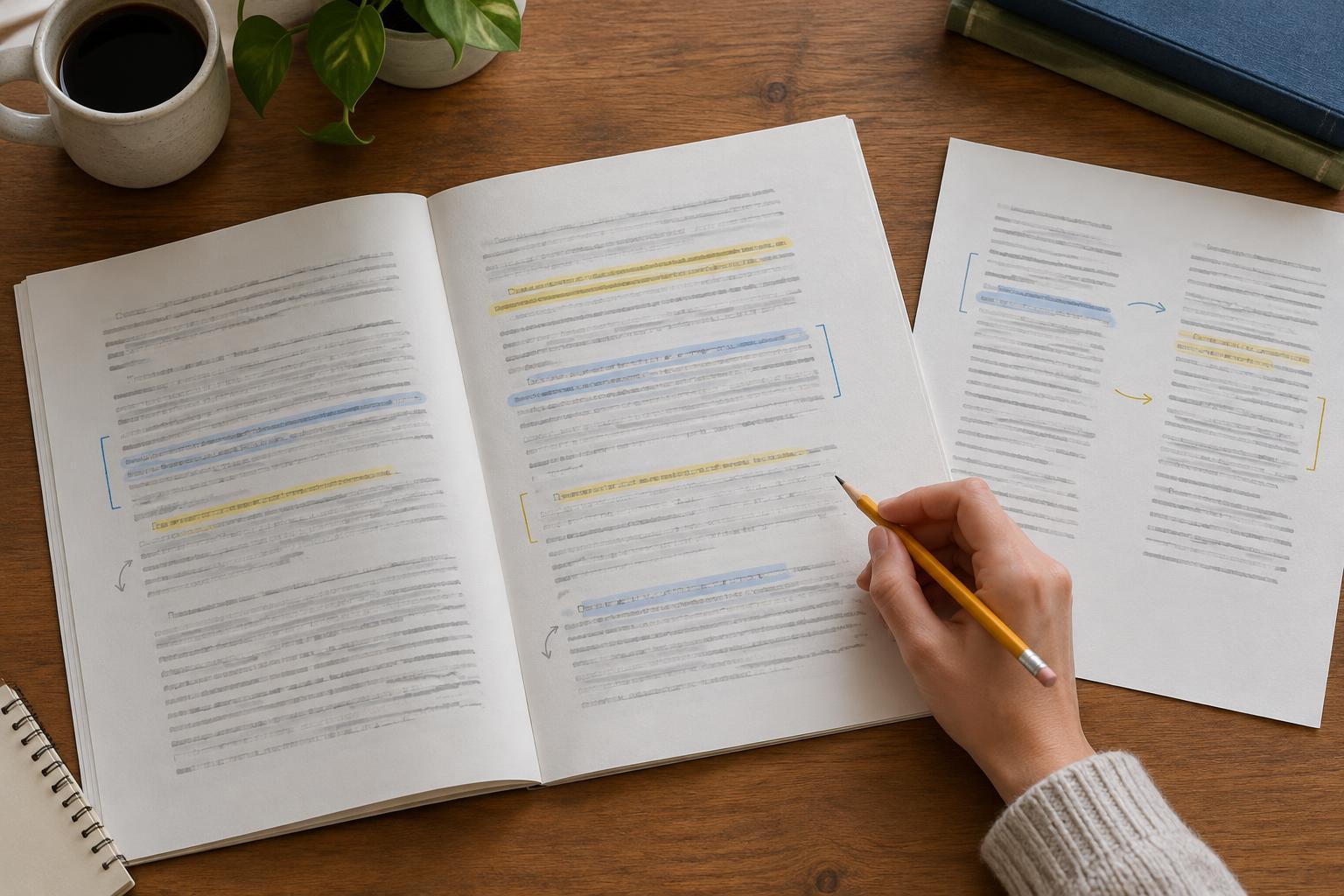
Start with a shared question, not a list of differences
Comparing two texts is more than reporting that one is longer or that they use different words. A useful comparison asks how each text handles a question they share. If both describe a neighborhood library, for example, you might ask how they present its value to the community. That question gives you a reason to examine details rather than collect differences at random.
Read each text once for its overall direction. Who seems to be speaking? What does the text want the reader to notice, feel, or do? Then write a one-sentence account of each text’s main emphasis. Keep these notes provisional: a striking detail on a second reading may change your first impression.
Before comparing, check that you have identified the same subject at a useful level of detail. Two texts may both mention a library, but one may focus on its quiet rooms while the other discusses access to books. Their points of contact might be the place itself, the people who use it, or an idea such as public space.
Choose evidence that reveals a choice
Specific evidence can be a word, an image, an example, a sentence pattern, or a detail the text spends time developing. It is strongest when you can explain why that choice matters. Saying that both texts mention children identifies a similarity; noticing that one depicts children reading alone while the other shows them learning together gives you something to analyze.
For a simple practice pair, imagine two short descriptions written for this exercise. Text A follows a visitor into a library and lingers on the sound of pages turning. Text B describes a busy afternoon of group activities and emphasizes the range of people using the building. Both present the library as valuable, but their selected details suggest different ways of valuing it: private concentration in A and shared activity in B.
When working with actual texts, point to their exact wording where it carries your argument. A brief phrase is often more useful than a long passage. If you paraphrase instead, identify the precise moment or example you mean. In either case, give readers enough context to see what the evidence refers to.
Compare what the details do
Evidence does not explain itself. After identifying a detail, ask what effect it creates and how it supports the text’s larger emphasis. The quiet sound in Text A invites attention to an individual experience. The group activities in Text B make the library’s value visible through interaction. The comparison becomes sharper when you name both the shared idea and the different routes the texts take toward it.
Look beyond subject matter to structure and perspective. Does one text begin with a person while the other begins with a general claim? Does one move through a scene and the other present a series of examples? Such choices can shape how readers encounter the same subject. A scene may ask readers to imagine being present; a list may help them grasp variety or scope.
Avoid treating every difference as a contradiction. Two accounts can complement each other, or they can emphasize different parts of a subject without disagreeing. Ask whether the evidence supports a genuine conflict, a difference in emphasis, or a shared view expressed through different methods. This distinction keeps your comparison fair.
Build paragraphs around a relationship
A clear comparison paragraph starts with a claim that applies to both texts. For example: both descriptions portray the library as welcoming, but one creates that impression through stillness while the other creates it through activity. Follow with evidence from Text A, explain its effect, then bring in evidence from Text B and explain how it relates. End by stating what the pairing helps you understand.
This approach is usually more revealing than writing everything about A and then everything about B. When the evidence sits close together, readers can follow your reasoning without having to remember details from several paragraphs earlier. Use connecting language with care: similarly signals a meaningful likeness, whereas signals a contrast, and by contrast is useful when you have established a common point of reference.
Test each paragraph by asking whether it would still make sense with one text removed. If it would, you may be analyzing two texts separately rather than comparing them. Add a sentence that names their relationship and explains why it matters to your central question.
Revise for precision and proportion
On revision, check that your claims are no broader than your evidence. A single quiet scene cannot prove that a text rejects community life; it may simply focus on one visitor. Qualifying a claim can make it more accurate: the scene foregrounds solitary reading, while the second description foregrounds social use. Precision is more persuasive than an exaggerated opposition.
Give each text enough attention to make the comparison balanced, though not necessarily equal in length. If one text supplies a particularly useful detail, you can spend longer explaining it, provided the other text remains part of the argument. Remove evidence that repeats a point you have already established, and replace vague judgments such as more effective with an explanation of the effect you mean.
For a final exercise, choose two short texts on a familiar subject. Write one shared question, select two details from each text, and draft a paragraph about one relationship between them. Then underline every sentence that explains how the evidence supports your claim. If the paragraph contains more description than explanation, that is your next place to revise.