Proofread after the larger edits are done
Proofreading is the last close look at a piece before you share it. Its job is to catch small errors in the text you intend to keep: a mistyped letter, an extra word, a missing article, or a sentence that lost a word during revision. It is not the ideal time to reorganize an argument or rewrite every opening sentence. If you make substantial changes, give the changed passages another proofreading pass afterward.
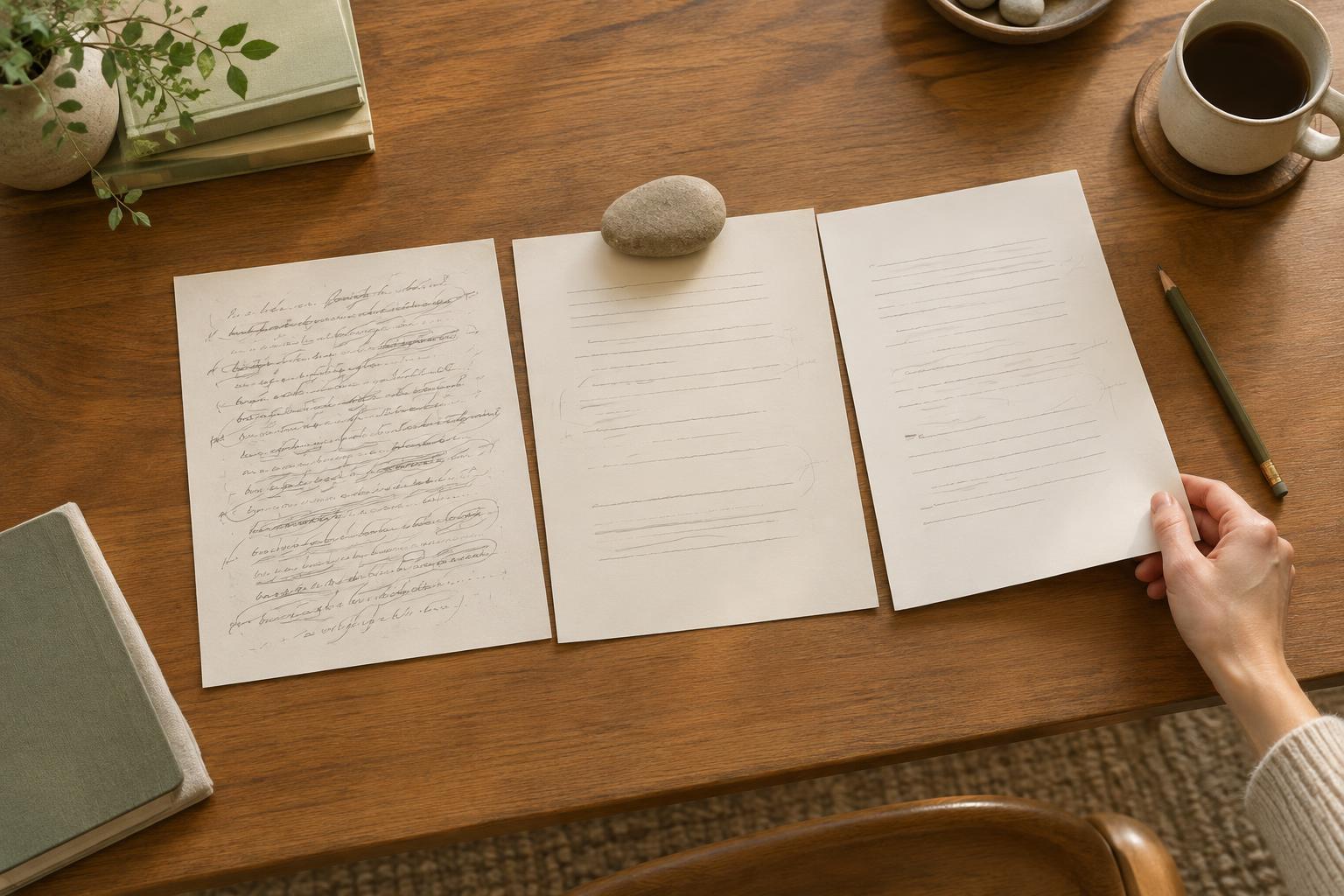
Start with a version that feels settled. Save it, then step away if you can. Even a short break may make the wording less familiar when you return. Familiarity is the challenge: because you know what you meant to write, your eye can glide over what is actually on the page. A deliberate routine gives each sentence a better chance of being seen.
Make the text less familiar
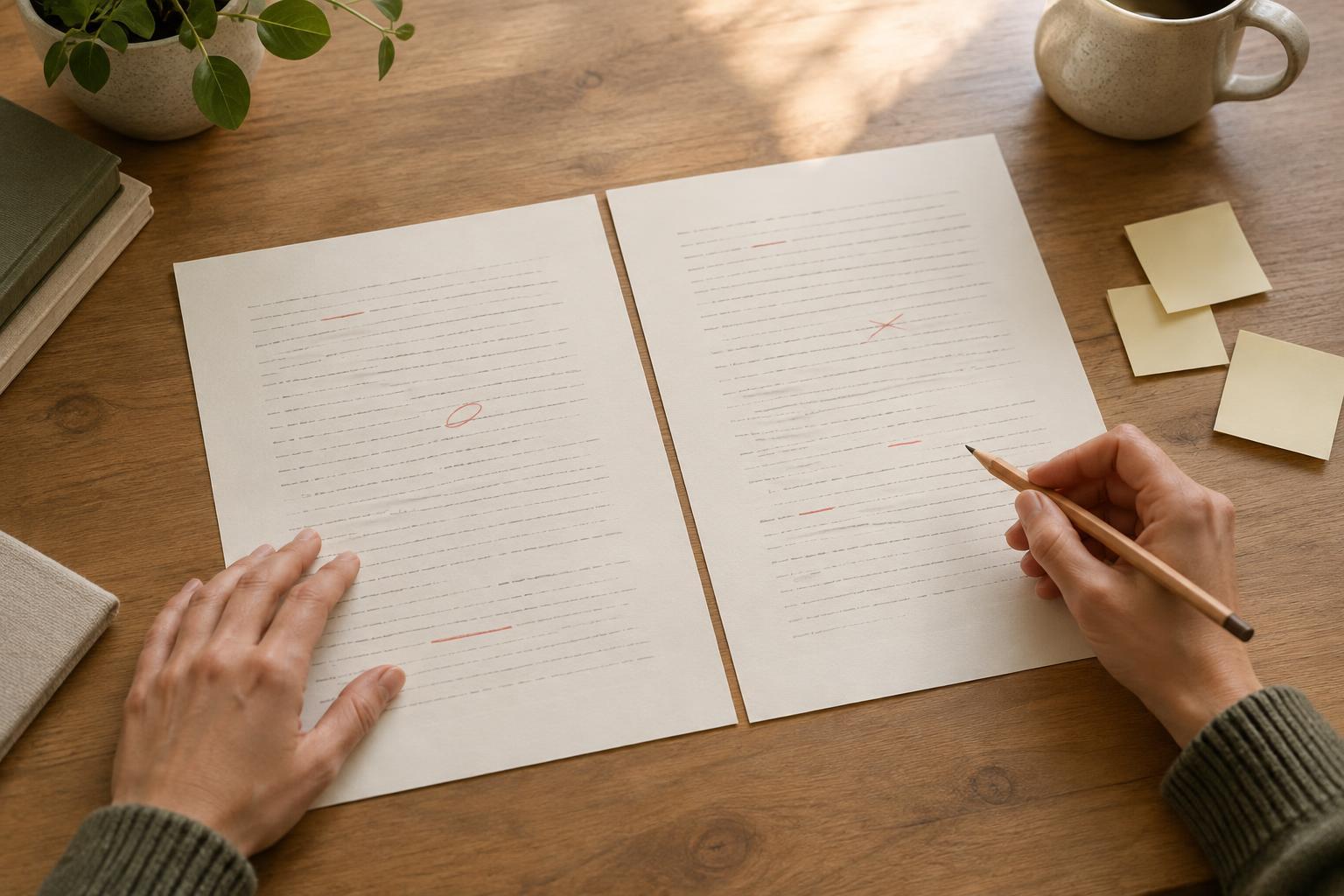
Change how you view the draft before reading it. You might enlarge the text, switch to a different font, or print it. The point is not that one format is inherently better; a changed layout can interrupt the habit of recognizing whole passages at a glance. Keep a way to mark errors nearby so you do not have to trust your memory.
Read slowly, following one line at a time with a finger or cursor. If a paragraph is dense, cover the lines below the one you are checking. Pause at sentence endings rather than letting the rhythm carry you straight into the next sentence. For a short piece, reading aloud can also help: your voice may hesitate where a word is missing or repeated.
Try not to repair every awkward phrase as you go. Mark anything that needs more than a small correction and return to it after the pass. Otherwise, a proofreading session can turn into another round of drafting, with new errors introduced just as you are trying to remove the old ones.
Give typos their own pass
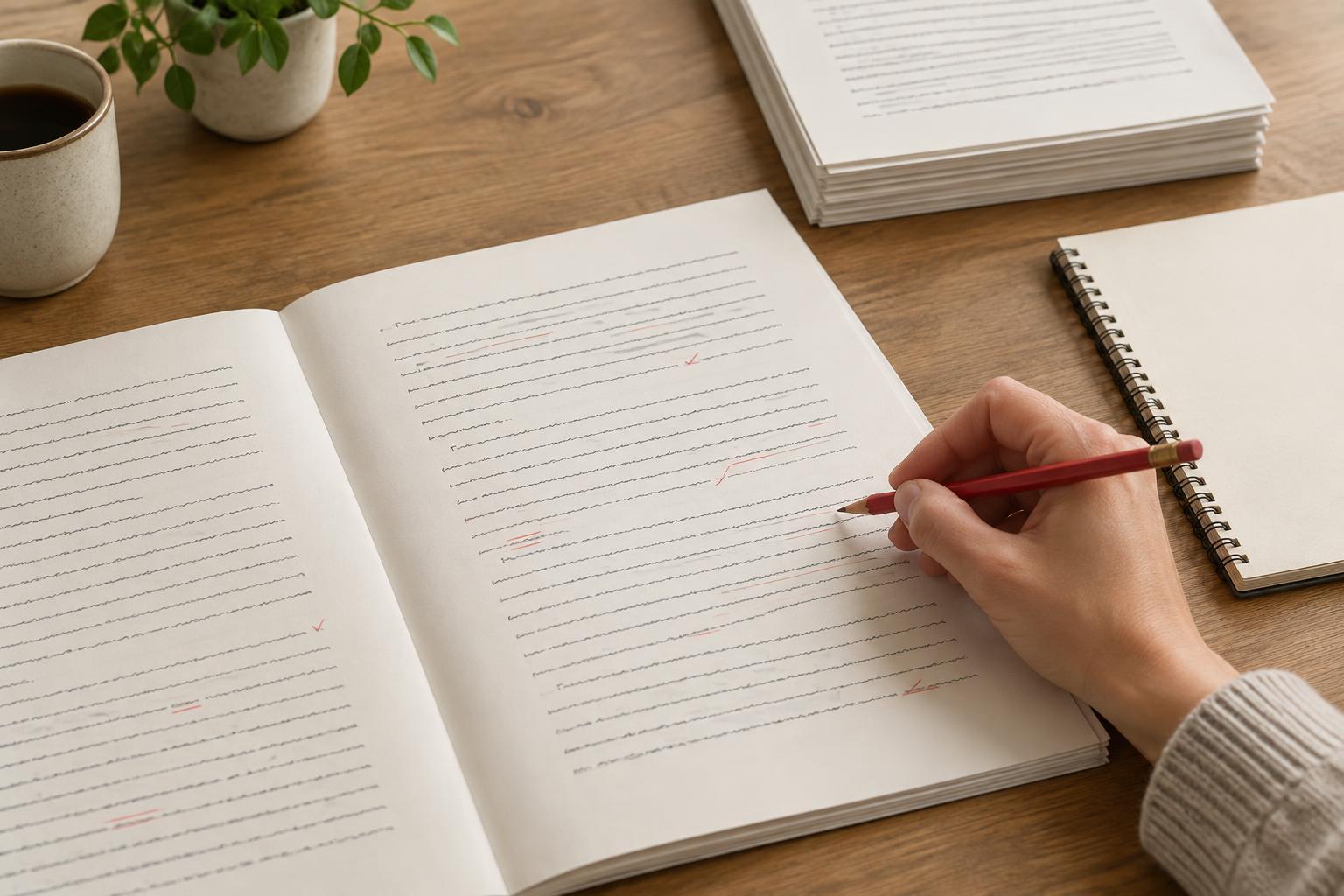
On the first pass, attend mainly to the shapes and order of words. Look for transposed letters, doubled letters, missing letters, and words that appear twice. Check names, headings, and any terms you typed repeatedly; repetition can make a typo look oddly normal. Pay special attention to text you added late, when you may have been working quickly.
A spelling tool is useful here, but treat its suggestions as prompts to inspect, not automatic corrections. It may catch an unfamiliar spelling while leaving a real-word typo untouched. In “The editor read the note form the author,” every word is spelled correctly, but “form” is probably meant to be “from.” Read the sentence around a flagged word before changing it, and give unflagged words the same attention.
For a short list, heading, or caption, you can check words backward, starting with the last word and moving toward the first. That breaks the flow of meaning and can make letter-level errors easier to notice. Use this as an extra check, not as a way to proofread full sentences: reading backward will not tell you whether the sentence makes sense.
Read again for missing and extra words
A second pass should follow meaning. Read each sentence as written and ask whether its parts connect. Missing small words are especially easy to supply in your head: “She sent draft to the editor” may need “the,” while “He asked me review the opening” may need “to.” An omitted larger word can be harder to identify. If a sentence feels incomplete, read it once more without guessing what the writer intended, then revise it so a new reader can follow it.
Watch for leftovers from edits. Changing “a clear, direct explanation” to “a direct explanation” can leave an accidental “a a” if the replacement is pasted carelessly. Combining two sentences can also produce doubled verbs or competing openings. When you find a gap, check the words on both sides of it. The fix may be a missing word, but it may instead be an extra word or a sentence that needs recasting.
Read aloud at a pace that lets you hear each word, including articles and prepositions. If you stumble, mark the spot even if you cannot immediately explain why. Then inspect it on the page. Reading aloud is an aid, not a final test: a reader can unconsciously say a missing word that is not there.
Finish by checking the corrections
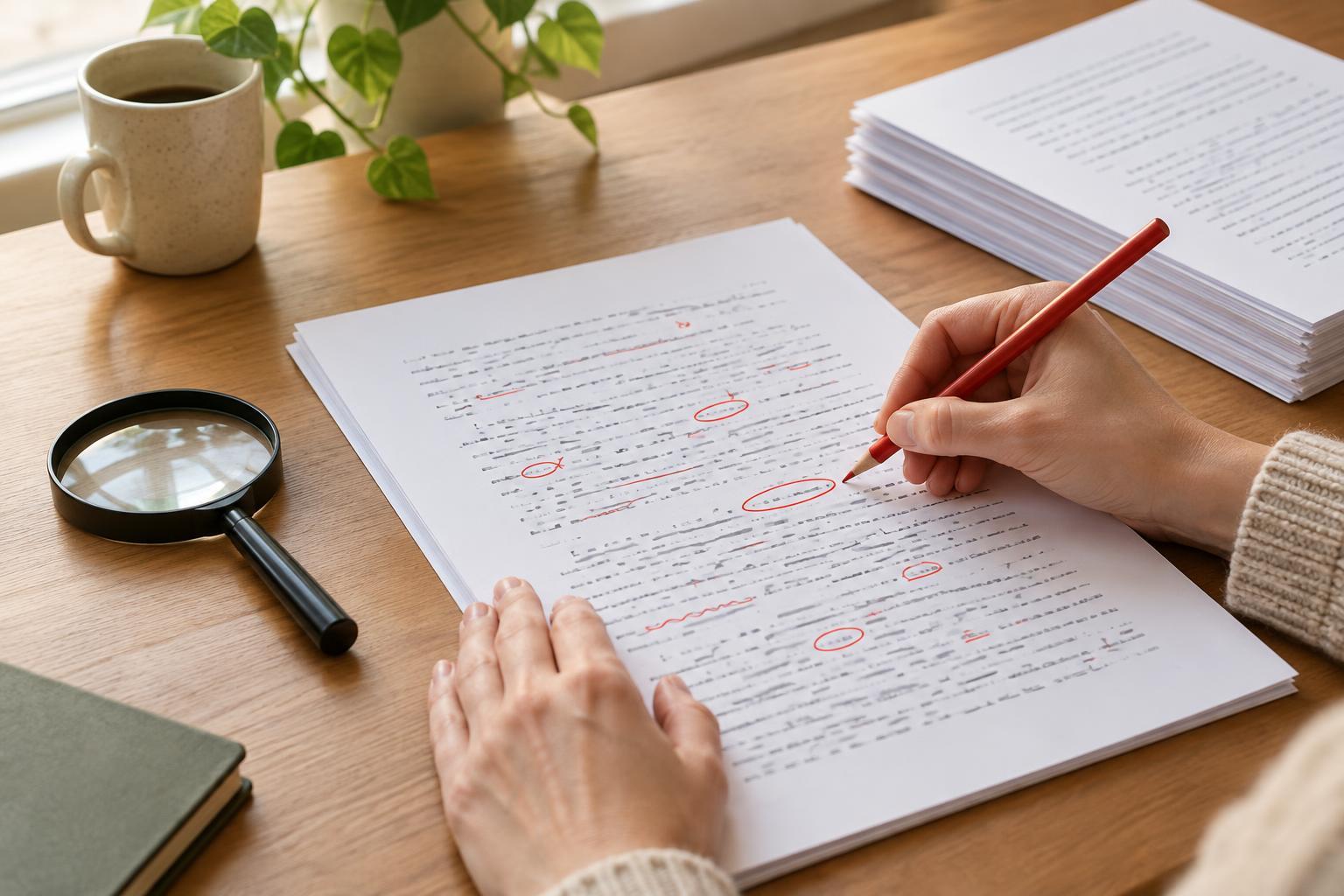
Make the marked changes, then reread every sentence you touched. Check the word before and after each correction; fixing a typo can create a new one, and inserting a word can change the sentence’s grammar. Finally, scan headings, captions, and the first and last lines of paragraphs. These short or prominent areas are easy to overlook when you have concentrated on the body text.
A practical proofreading routine is simple: settle the draft, change your view, check word forms, read for omissions, and inspect the fixes. If time is limited, a focused pass over the text you will actually publish is more useful than a hurried attempt to improve everything at once. The goal is not to make a sentence immune to every possible revision. It is to make sure readers can see the words you meant to give them.