Start with the question the writer is answering
Nonfiction writers do more than present information. They may explain a process, describe a place, tell a true story, or argue for a conclusion. When you read an argument, begin by asking: What question is this writer trying to answer? A piece about public benches, for example, might ask whether a town should add more seating to its parks. That question gives you a place to look for the writer’s claim.
A claim is a statement the writer wants readers to accept. In our example, the main claim might be, “The town should add benches along its walking paths.” It may appear near the beginning, at the end, or in pieces throughout the article. If you cannot find a single sentence that states it, try finishing this prompt in your own words: “The writer wants me to believe that…” Then check your answer against the whole piece, not just its opening paragraph.
Be careful not to confuse the topic with the claim. “Park benches” names a subject; “The town should add benches along its walking paths” takes a position on that subject. Also distinguish the main claim from smaller claims. A sentence such as “Some paths have long stretches without a place to rest” might support the central position without being the article’s overall point.
Trace the reasons beneath the claim
Reasons answer the reader’s natural follow-up question: Why should I accept that claim? A writer arguing for more benches might say that seating makes longer walks more manageable for people who need to pause, or that it gives visitors a comfortable place to spend time. Each reason offers a line of support for the same conclusion.
To find reasons, look for words such as because, since, and therefore, but do not depend on them. Writers often leave these connections unstated. Try placing “because” after the main claim: “The town should add benches because…” If a sentence completes that thought sensibly, it may be a reason. You can sketch the structure in a few words: “Add benches → places to rest → walking paths are easier to use.” This small map helps you see whether a paragraph advances the argument or supplies background.
Not every appealing sentence is a reason. “The park has tall trees” is relevant to the setting, but it does not clearly explain why the town should add benches. It could become part of a reason if the writer connects it to a point, such as giving visitors a place to sit in the shade. Read for that connection rather than assuming it.
Separate evidence from explanation
Evidence is the material a writer uses to support a reason or claim. Depending on the piece, it may include observations, examples, documents, measurements, or accounts from people with direct experience. Suppose the writer says, “The western path runs from the entrance to the pond without any seating.” That observation could support the reason that walkers lack places to rest. By contrast, “Seating would make walks more manageable” is a reason: it explains why the proposed change matters.
Examples can make an argument easier to understand, but they do not automatically establish that its conclusion is true. A description of one visitor struggling to complete a walk may show a possible need for seating. It does not, by itself, tell you how often that need arises or where benches would be most useful. Ask what each piece of evidence actually shows, then compare that with what the writer asks it to prove.
Pay attention to the source and scope of a detail. Is the writer describing something they observed, reporting what another person said, or summarizing a document? Does the evidence concern one path, several parks, or the whole town? You need not dismiss narrow evidence; you do need to notice when a broad claim rests on a small example.
Check the links, not just the parts
A writer can present a clear claim, plausible reasons, and concrete evidence while still leaving a gap between them. Imagine that the article establishes that one path has no seating. That supports adding a bench there more directly than it supports placing benches on every path. The missing step is an assumption: that the same need exists elsewhere. Naming the assumption helps you evaluate the argument without treating every gap as a fatal flaw.
Look, too, for alternative explanations or practical limits the writer has not addressed. If a path is difficult to use, seating might help, but steep ground or poor maintenance might also matter. A careful reader can recognize the force of a reason while asking whether it is enough to justify the full claim. Qualifying words deserve attention: “may help,” “often helps,” and “will solve” make promises of different sizes.
The aim is not to hunt for a reason to disagree. It is to understand how the conclusion is built. You may find that an argument is convincing in part: the evidence supports a trial bench on one route, for instance, but not a town-wide plan. That is a more precise judgment than simply calling the article strong or weak.
Practice with a three-column reading note
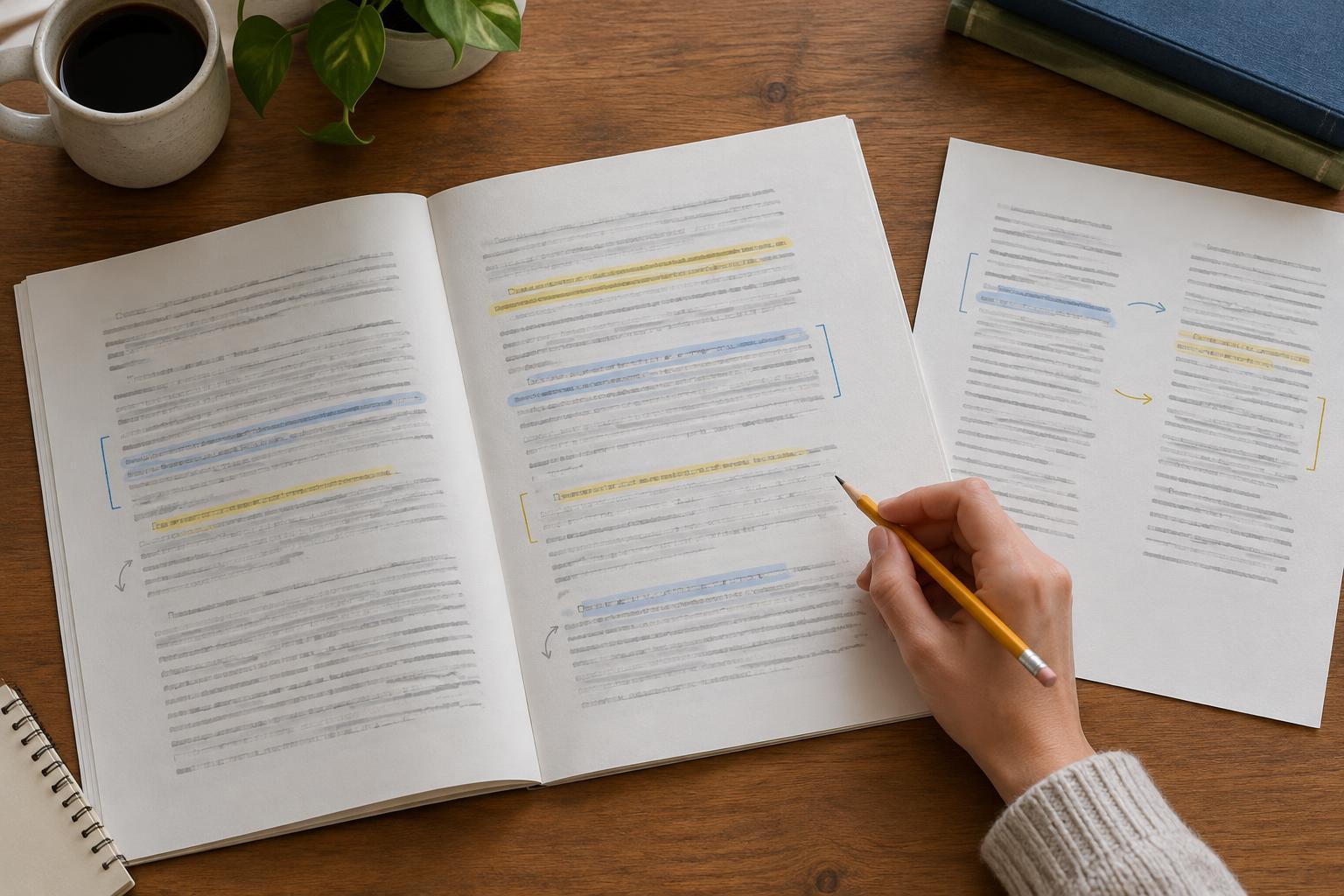
On your next nonfiction reading, draw three columns labeled Claim, Reasons, and Evidence. Write the main claim as one complete sentence, using your own words if necessary. List each distinct reason beneath it, then place the relevant evidence beside the reason it supports. If a detail does not fit, leave it aside for the moment; it may be context, an illustration, or a point you have not yet understood.
Finish by asking three questions: Does the evidence support the stated reason? Do the reasons support the size of the main claim? What would I need to know before accepting the conclusion? This brief exercise turns close reading into a habit of tracing connections. Whether you ultimately agree with the writer or not, you will be able to explain what the argument says and how it tries to persuade you.