Shared meaning, different impressions
Small, tiny, and petite can all describe something that is not large. That shared meaning makes them tempting substitutes. Yet a reader does more than picture a measurement when encountering an adjective. The word can suggest how unusual the size is, what kind of thing is being described, and how the writer regards it. Compare “a small room,” “a tiny room,” and “a petite room.” The first two sound natural, but the third may make a reader pause: petite is not usually the word for a room.
Choosing among near-synonyms therefore starts with two questions. What fact about size matters, and what impression should accompany it? If you only need to distinguish a room from a larger one, small may be enough. If you want the reader to feel how little space there is to move, tiny does more work. The strongest-looking word is not automatically the clearest one.
Small: the flexible starting point
Small is the broadest of the three words. It works for objects, places, groups, amounts, and differences: a small cup, a small town, a small audience, a small payment, or a small change. Its meaning depends on what it is compared with. A small suitcase is not the same size as a small button. Often the comparison is left unstated because the context supplies it.
This flexibility makes small useful when size matters but is not the point of the sentence. “She packed a small notebook” tells us something practical about the notebook without insisting that we admire or worry about its dimensions. The word can also describe degree rather than physical size, as in “a small improvement.” Tiny would make the improvement sound especially slight; petite would not fit that meaning.
Because small is so adaptable, it can sometimes be vague. If a reader needs to know whether a box fits on a shelf, an approximate measurement or a concrete comparison may help more than any adjective. But when exact dimensions are unnecessary, small is often the least distracting choice.
Tiny adds emphasis; petite adds a particular frame
Tiny presents something as very small, often in a way worth noticing. “A tiny crack appeared in the glass” draws attention to how slight the crack is. “A tiny kitchen” suggests a more cramped space than “a small kitchen.” Tiny can also create a contrast: a tiny seed may grow into a large plant. Because the word carries emphasis, using it for every modestly sized thing can flatten its effect.
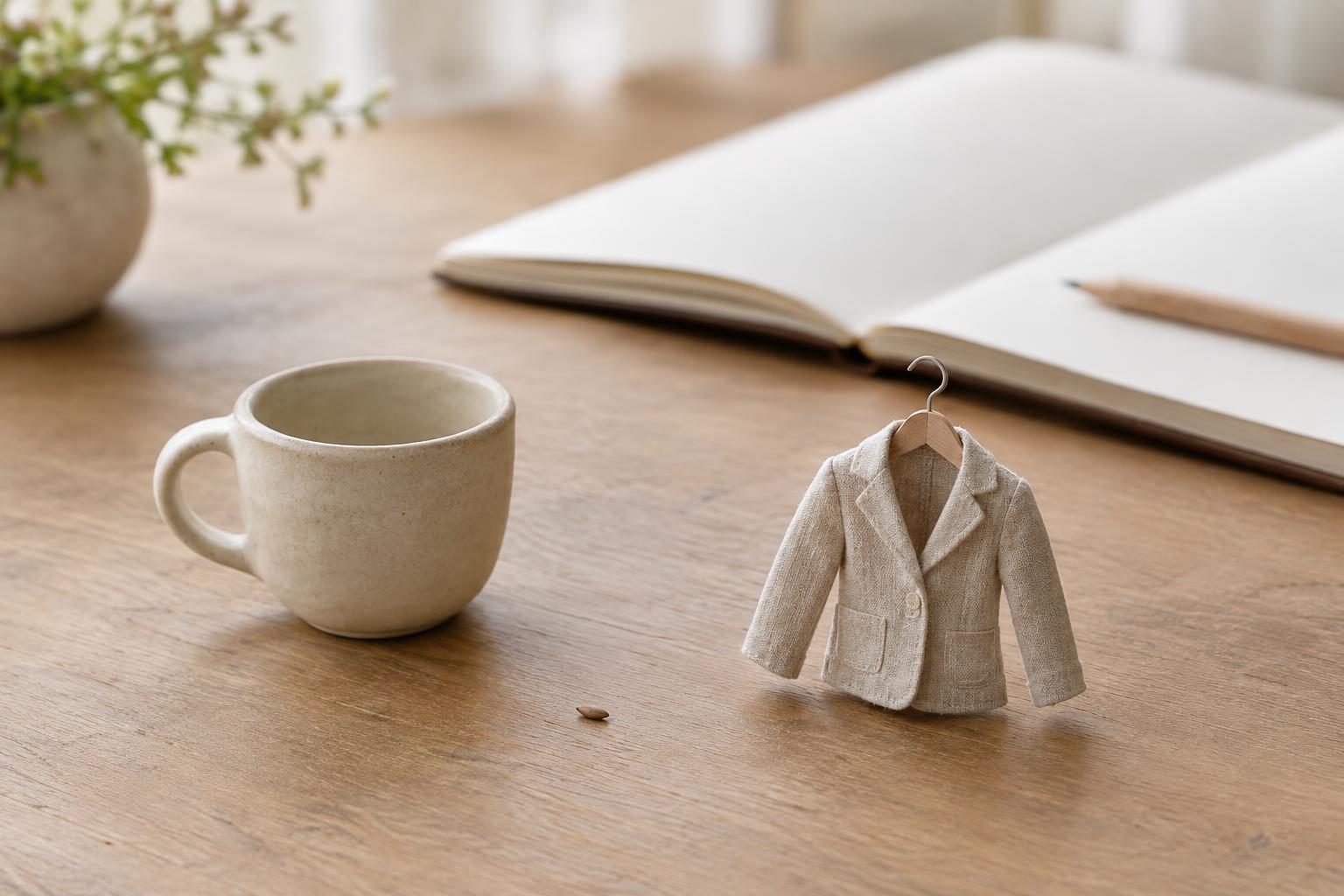
Petite has a narrower range. In everyday English, it commonly describes a person of short stature and slight build, or clothing designed for shorter proportions. “A petite jacket” may refer to its cut and fit, not simply to a jacket that looks unusually little. The word can also suggest delicacy or refinement in some contexts, but those associations depend on the subject and the reader. Calling a desk petite, for example, gives it a more stylized description than calling it small.
Context matters especially when describing people. Small and tiny may suggest overall size or vulnerability, while petite can sound more like a description of build or clothing fit. None of these impressions is guaranteed, and a writer should avoid assuming that stature reveals anything about someone’s personality. If height is relevant, a direct description may be clearer than a word with extra associations.
Test the word in its sentence
To choose a near-synonym, try replacing it and notice what changes beyond size. Consider: “She placed a small vase on the table.” This is a straightforward account. “She placed a tiny vase on the table” asks the reader to notice its diminutive scale. “She placed a petite vase on the table” may suggest a delicate decorative object, but it also risks sounding mannered if the scene does not support that tone.
Here is a quick editing exercise. Write one sentence about a garden, one about a person, and one about a mistake. Use small in each sentence, then test tiny and petite in its place. In “a small garden,” tiny may sharpen the picture, while petite may sound like a deliberate stylistic choice. In “a small mistake,” tiny changes the degree; petite sounds out of place. Notice where a substitution changes the meaning, where it changes only the tone, and where it simply does not fit.
The goal is not to ban familiar words or search for a more decorative alternative. It is to give the reader the right amount of information. Use small when a general comparison will do, tiny when exceptional littleness deserves emphasis, and petite when its more specific associations suit the subject. A precise word does not call attention to itself; it helps the reader see what you mean.