Why your ear catches what your eye misses
When you reread a draft silently, you may glide over words because you already know what you meant to say. Reading aloud slows that glide. You have to give each phrase a place in the sentence, and you notice when that place is hard to find. A sentence may be grammatically sound yet require an uncomfortable pause, a second breath, or a quick mental correction before its meaning becomes clear.
This does not mean every sentence must sound like casual conversation. An essay, story, or instruction page can have a more deliberate voice. The aim is to hear whether the wording helps a reader move through the thought. If you keep tripping over the same passage, treat the stumble as a clue, not as proof that the sentence is wrong.
Make a first pass without fixing everything
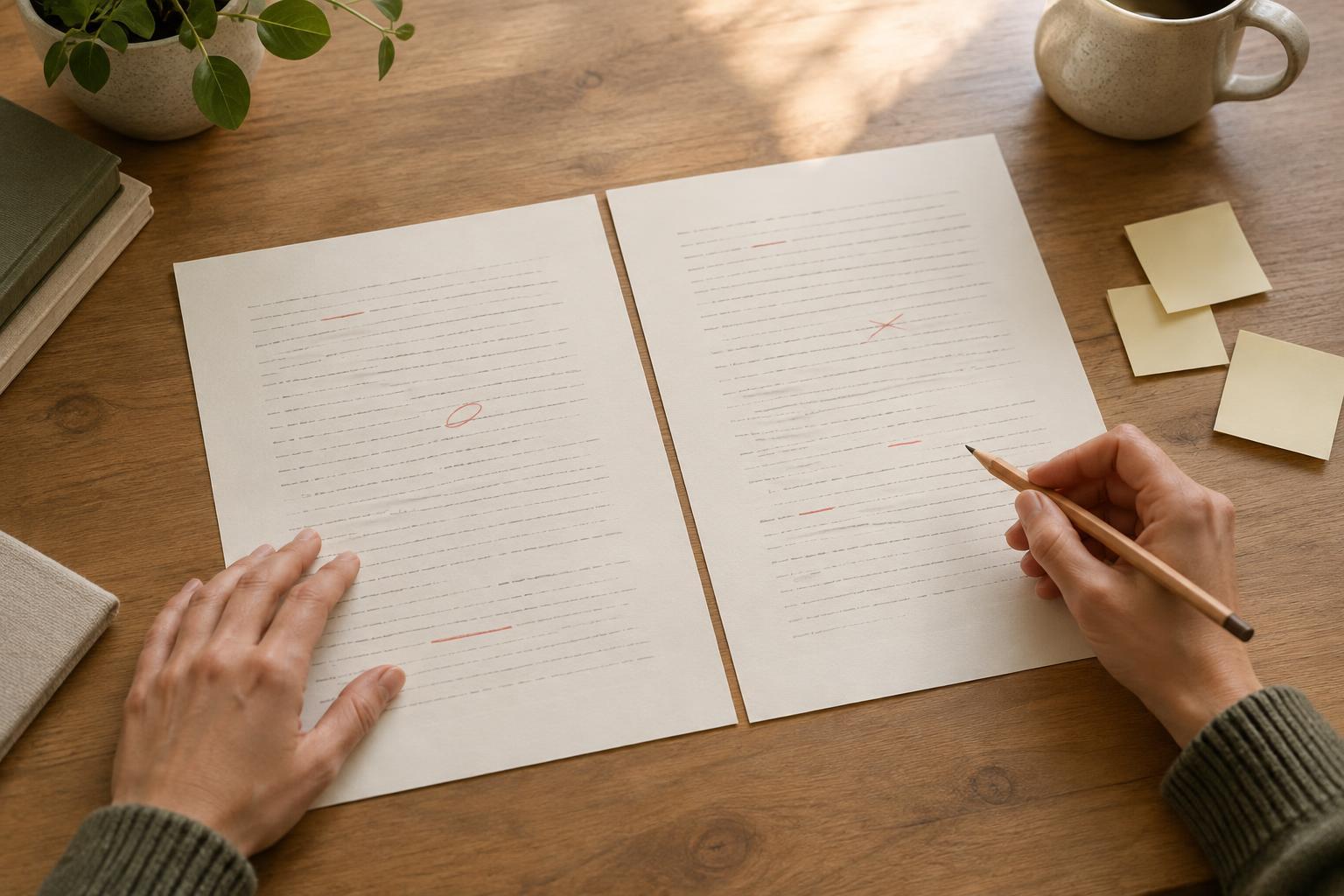
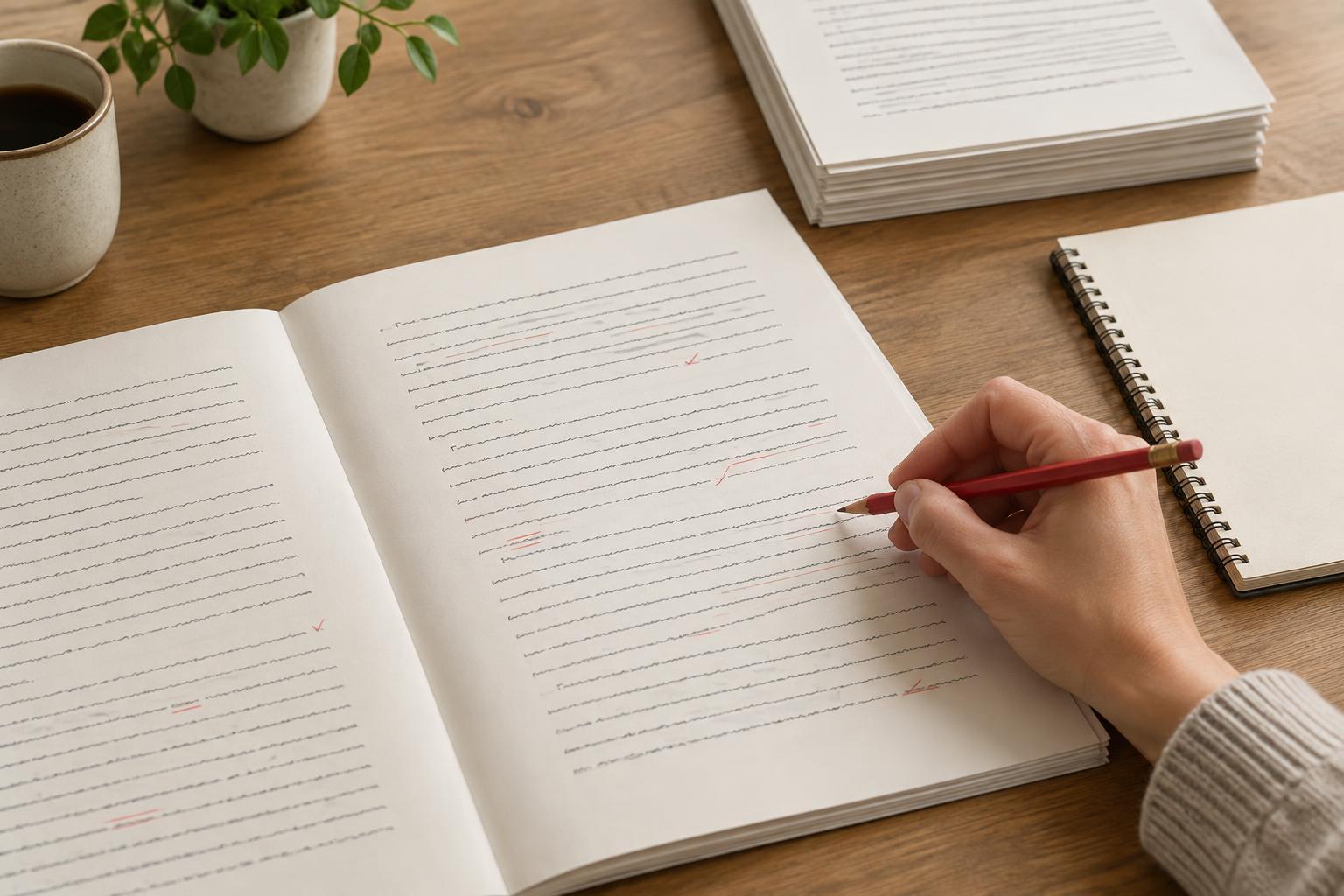
Choose a short stretch of your draft and read it at a comfortable pace. Read the words on the page, rather than quietly substituting the words you intended. Keep a pen or a comment tool nearby, but resist rewriting each line as soon as you notice a problem. Mark places where you hesitate, run out of breath, lose track of the subject, or wonder which word a pronoun refers to. Then finish the passage before revising.
A simple set of margin notes can help: “pause” for a place where the sentence seems to need a break, “who?” for an unclear reference, and “repeat” for an echo that distracts you. You need not perform the piece. A natural speaking voice is enough. If reading your own work feels self-conscious, try reading to an empty room or recording a brief passage and listening back.
After the pass, look for patterns. One stumble might come from an unfamiliar name or a sentence that needs careful attention. Several stumbles of the same kind may point to a habit worth addressing across the draft, such as long openings before the main verb.
Listen for crowded sentences and hidden subjects
A crowded sentence often contains several useful ideas without showing how they fit together. Consider: “After reviewing the notes from the meeting and thinking about the questions readers had raised in the earlier version, the introduction was changed.” By the time the sentence reaches “was changed,” you may have to work backward to find who made the change. A clearer version could be: “I reviewed the meeting notes and the questions readers raised about the earlier version. Then I changed the introduction.” The revision is not better simply because it is shorter; it makes the sequence and the actor easier to follow.
When a sentence makes you take an unplanned breath, check whether it carries more than one job. You might divide an explanation from its example, move a condition closer to the claim it limits, or replace an abstract phrase with a direct verb. Keep a long sentence if its parts build clearly and its pace suits the piece. Reading aloud helps you decide where length serves the meaning and where it hides it.
Notice echoes, emphasis, and misplaced pauses
Sound can draw attention to details your eyes accept without comment. Repeated words may be useful for emphasis, but accidental echoes can make a paragraph feel stuck: “The plan offers a simple way to plan the next stage.” Changing one use of “plan” may restore movement: “The guide offers a simple way to plan the next stage.” You may also hear a string of similarly shaped sentences that gives every point the same weight. Varying one opening or sentence length can help the important idea stand out.
Pay attention to where you naturally pause. If you pause before a clarifying phrase but the punctuation sends you onward, a comma, dash, or new sentence may help. Sometimes punctuation is not the problem: the phrase itself is too far from the word it explains. Rather than adding marks until a sentence feels manageable, try moving its parts. Read the revised version again to see whether the pause now matches the meaning.
Revise for the reader, not just for the sound
An easy-to-say sentence is not automatically an effective one. Speech allows gestures, changes in tone, and immediate questions; a reader has only the words you leave on the page. After a read-aloud pass, check each proposed change against your purpose. Does it clarify who did what? Does it preserve the distinction you meant to make? Does it fit the voice of the surrounding paragraph?
Try a final comparison: read the original problem sentence, read your revision, then read the revision in its paragraph. A phrase that sounds smooth alone may repeat information already nearby or weaken a useful contrast. The strongest edit usually does two things at once: it removes an obstacle you can hear and makes the thought easier to understand. You can end the pass when the words no longer demand extra effort at the places where you previously stumbled.