What makes a sentence complete?
A complete sentence gives readers a thought that can stand on its own. It normally contains a subject and a verb, but those ingredients alone do not guarantee completeness. Consider “The lights went out.” We know what happened. Now consider “When the lights went out.” The same subject and verb are present, yet the word “when” makes us wait for something else: What happened when the lights went out? That unfinished group of words is a sentence fragment.
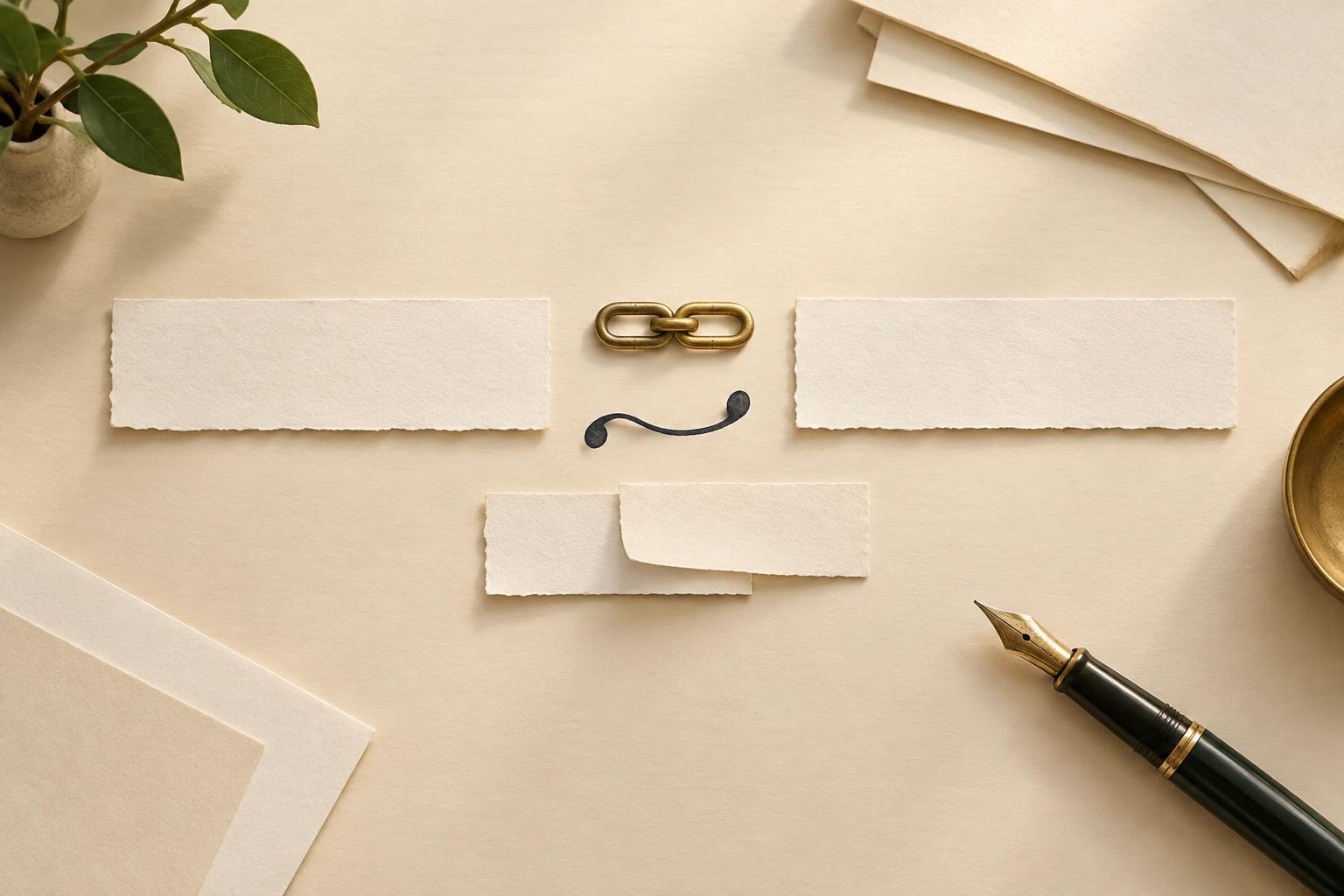
The missing piece is a main clause, also called an independent clause. It can express a complete thought by itself: “We reached for our phones.” Put the two together, and the relationship becomes clear: “When the lights went out, we reached for our phones.” The first clause sets the time; the main clause tells us what happened then. A fragment often arises when a writer puts a period between parts that belong together.
How to recognize common fragments
One common fragment begins with a word that makes a clause dependent, such as because, although, if, when, while, or unless. “Because the path was flooded” explains a reason but does not say what followed from it. “We turned back because the path was flooded” supplies the main clause. A useful test is to read the group of words alone and ask whether it leaves you waiting for an answer. If it does, look for the clause it depends on.
A fragment can also be a phrase rather than a clause. “Under the old wooden bridge” tells us where, but not what happened there. “Carrying a stack of notebooks” describes an action without identifying who is carrying them or giving that action a complete sentence around it. These phrases can do valuable work when attached to a main clause: “We found the missing ball under the old wooden bridge,” or “Carrying a stack of notebooks, Mira hurried upstairs.”
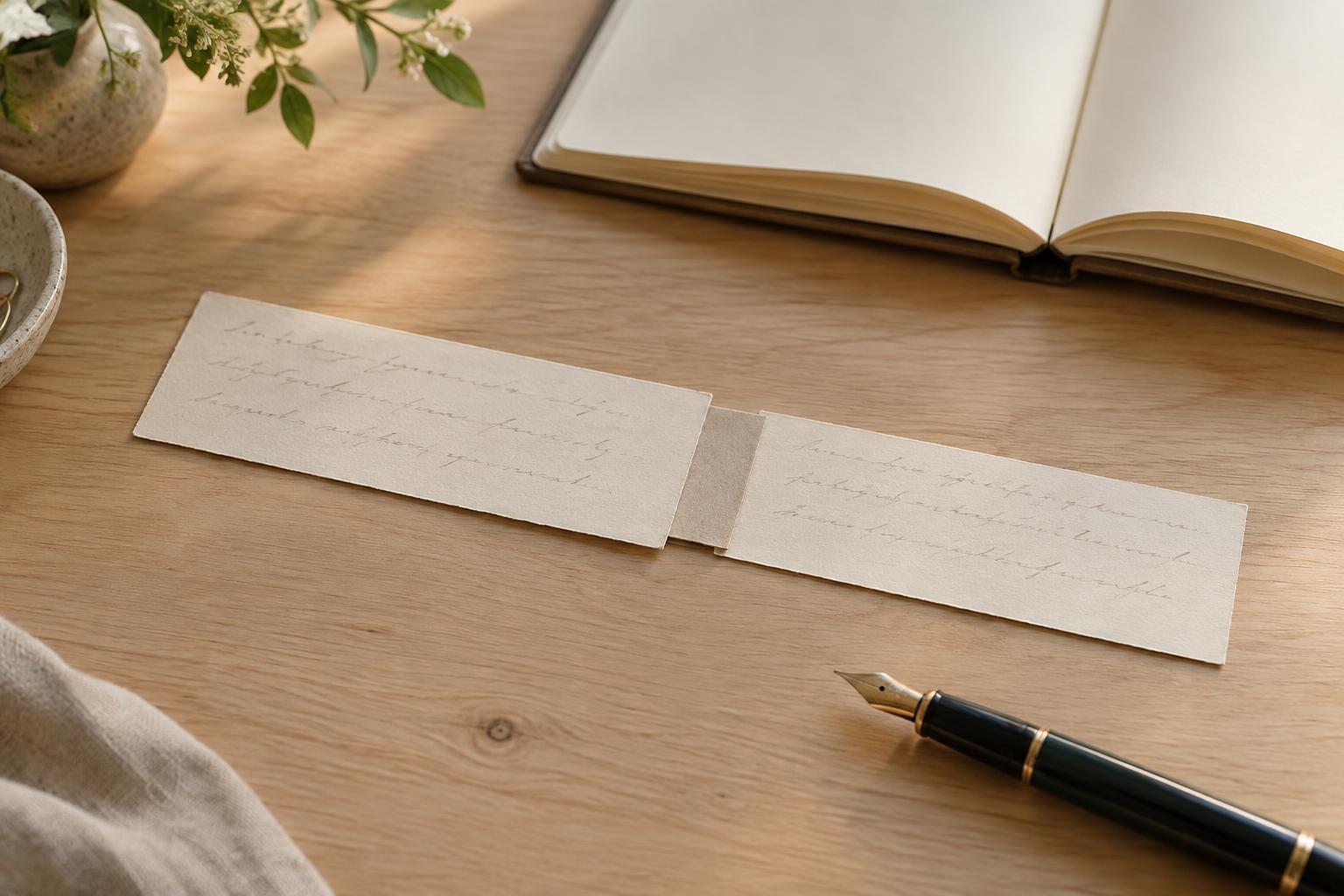
Watch for fragments that follow a complete sentence and seem to add an afterthought: “The room was filled with small repairs. Such as a loose handle and a cracked tile.” Here, “such as” introduces examples, not a new complete thought. The simplest repair is often to replace the period with a comma: “The room was filled with small repairs, such as a loose handle and a cracked tile.” You might instead rewrite the second part as a sentence: “A loose handle and a cracked tile still needed attention.”
Choose a repair that fits the meaning
Joining a fragment to a neighboring sentence is often the quickest fix, but it is not the only one. Take “Although the instructions looked simple. We read them twice.” Joining the parts produces “Although the instructions looked simple, we read them twice.” If the contrast matters less than the action, you could remove “although”: “The instructions looked simple. We read them twice.” The best choice depends on the relationship you want readers to notice.
Sometimes a fragment points to a missing idea rather than misplaced punctuation. “After the final page of the letter.” could become “After the final page of the letter, I found a folded photograph.” It could also become “The handwriting changed after the final page of the letter.” Those sentences tell different stories. Before adding a clause, ask what the fragment is meant to contribute: time, place, cause, contrast, or description. Then give it a clear connection to the thought it supports.
Be careful not to create a new problem while repairing a fragment. If you join two complete sentences with only a comma, the result is a comma splice: “The rain stopped, we opened the windows.” A period, semicolon, or suitable joining word would work instead. Repairing “Because the rain stopped” by removing “because” is fine, but the resulting sentence still needs appropriate punctuation beside its neighbors.
When a fragment is a choice
Not every fragment is a mistake. In dialogue, a character might answer “After lunch” to the question “When are we leaving?” A writer might use a short fragment for emphasis: “The cupboard was empty. Not a crumb.” Readers can understand both because the surrounding sentences provide the missing context. In creative writing, that pause may be more effective than a fully spelled-out sentence.
Context matters. A fragment in a scene can suggest a quick observation or a sudden change in rhythm. In an explanation, however, an accidental fragment may make readers stop and work out which idea belongs to which sentence. Use the complete version as your default, then keep a fragment if its effect is clear and deliberate. Reading a paragraph aloud can help: does the pause sharpen the meaning, or does it make the thought feel abandoned?
A quick practice check
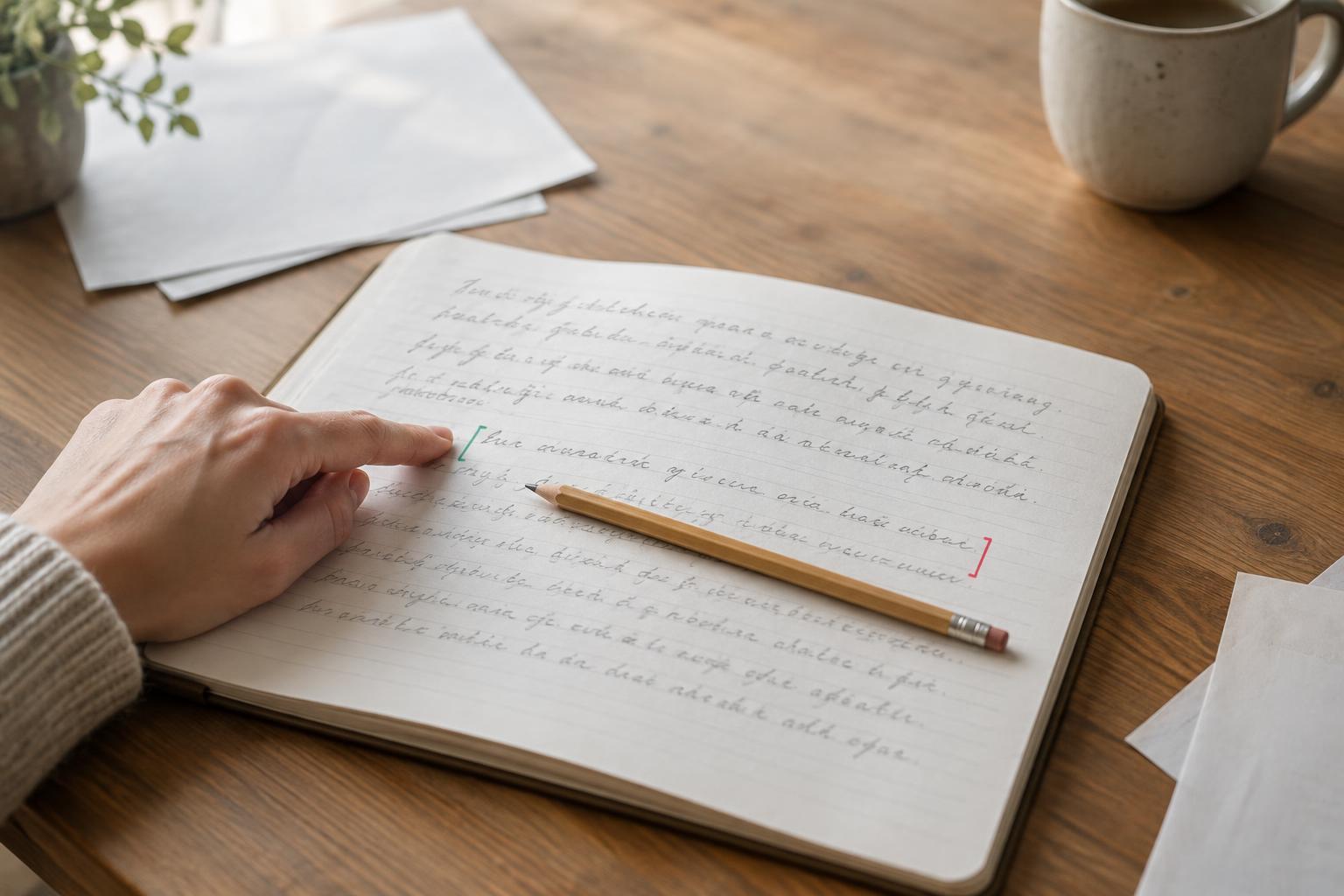
Try reading these groups of words as separate sentences: “The kettle began to whistle.” “While I searched for a clean cup.” “On the top shelf.” The first stands alone. The other two leave questions: what happened while I searched, and what was on the shelf? One possible revision is “The kettle began to whistle while I searched for a clean cup on the top shelf.” Another might separate the ideas: “The kettle began to whistle. I searched for a clean cup on the top shelf.” Each version gives every sentence a main clause.
When you edit your own work, circle words that signal dependence and check the phrases set off by periods. You need not turn every line into the same sentence pattern. The goal is to know which groups of words stand alone, which need a main clause, and which fragments you have chosen to leave for a reason.