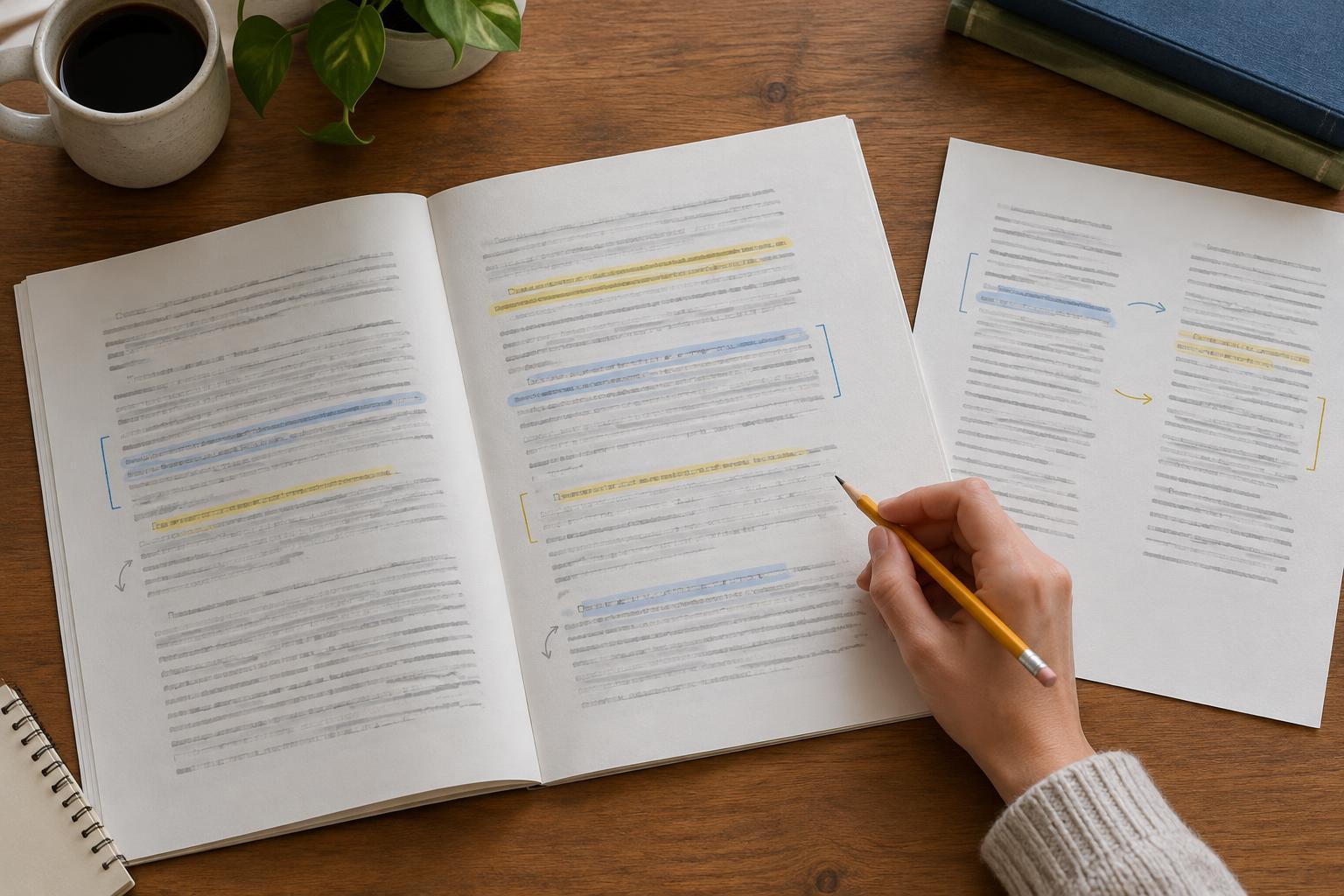
Find the gap between the reason and the claim
When you read an argument closely, start by separating what the writer wants you to believe from the reasons offered for believing it. Consider this claim: “The library should stay open later because many people leave work at six.” The proposed action is the conclusion. The observation about work schedules is a reason. But the reason does not, by itself, establish that later hours are a good choice. Something has to connect the two.
That connecting idea is an unstated assumption. Here, one possibility is that a substantial number of people who leave work at six would use the library in the evening. Another is that the library can extend its hours without giving up something more valuable. Writers often leave such ideas unsaid because they seem obvious, because space is limited, or because they have not examined the link themselves. Your task is not to guess their motives. It is to notice what the argument needs in order to work.
Use a simple bridging question
Once you have marked the reason and conclusion, ask: “What would have to be true for this reason to support this conclusion?” Try to answer in one plain sentence. In the library example, “People who need later hours would actually visit the library” is a useful bridge. It is more precise than “Libraries matter,” which may be true but does not address the particular move from work schedules to opening hours.
Pay attention to shifts in the words an argument uses. “Many people leave work at six” may quietly become “many library users need evening access.” Those groups are not necessarily the same. Likewise, a claim that a plan is “popular” may turn into a conclusion that it is “effective.” Popularity and effectiveness are different ideas; moving from one to the other requires an additional premise. Repeated words can also hide a shift if their meaning changes between sentences.
Test the assumption without rejecting the argument
A useful test is to imagine the stated reason is true while the conclusion remains uncertain. Suppose many people do leave work at six, but the library’s evening visitors mostly use digital services from home. The original reason still holds, yet the case for longer building hours becomes weaker. This imagined situation reveals what else the argument depends on. It does not prove that the conclusion is false; it shows where a reader would need more information.
You can also try denying your proposed assumption. If denying it makes the reasoning fall apart, you have probably found an important link. If the argument still works, your assumption may be too broad or may not be necessary. For example, the library need not serve every person who works until six for later hours to make sense. A smaller but meaningful group might be enough. Frame assumptions as carefully as the argument requires, rather than making them easy to dismiss.
Read charitably, then ask what would settle the question
An unstated assumption is not automatically a flaw. Everyday writing depends on shared background knowledge, and spelling out every premise would make a paragraph exhausting to read. The more useful question is whether the missing idea is reasonable in context. If a writer says that a path is muddy because it rained, readers can usually supply the link. If the writer proposes an expensive redesign because of one muddy day, the stakes and scope make the missing steps more important.
Try stating the strongest plausible version of the assumption before evaluating it. Then ask what observation would help you judge it. For the library, you might want to know whether potential visitors can reach the building after work and what services they hope to use. You do not need to possess that information to read critically. Identifying the missing premise gives you a focused question instead of a vague feeling that something is wrong.
Practice on a short argument
Take this sentence: “Our newsletter should use shorter articles because readers often open it on their phones.” First, underline the reason: readers open the newsletter on phones. Then name the conclusion: articles should be shorter. Now supply a bridge, such as “People reading on phones are less willing or able to read long articles in this newsletter.” Notice how specific that is. It concerns these readers and this format, not an absolute rule about phones.
Next, test the bridge. Perhaps readers save longer articles for later, or perhaps clear subheadings make them comfortable reading at length on a small screen. Those possibilities do not rule out shorter articles; they show that phone use alone cannot decide the question. You might revise the argument to propose testing several lengths or improving navigation first. Close reading often leads to a better claim, not just a criticism: one that says what the evidence supports and leaves room for what you still need to learn.