Start with a question, not a highlighter
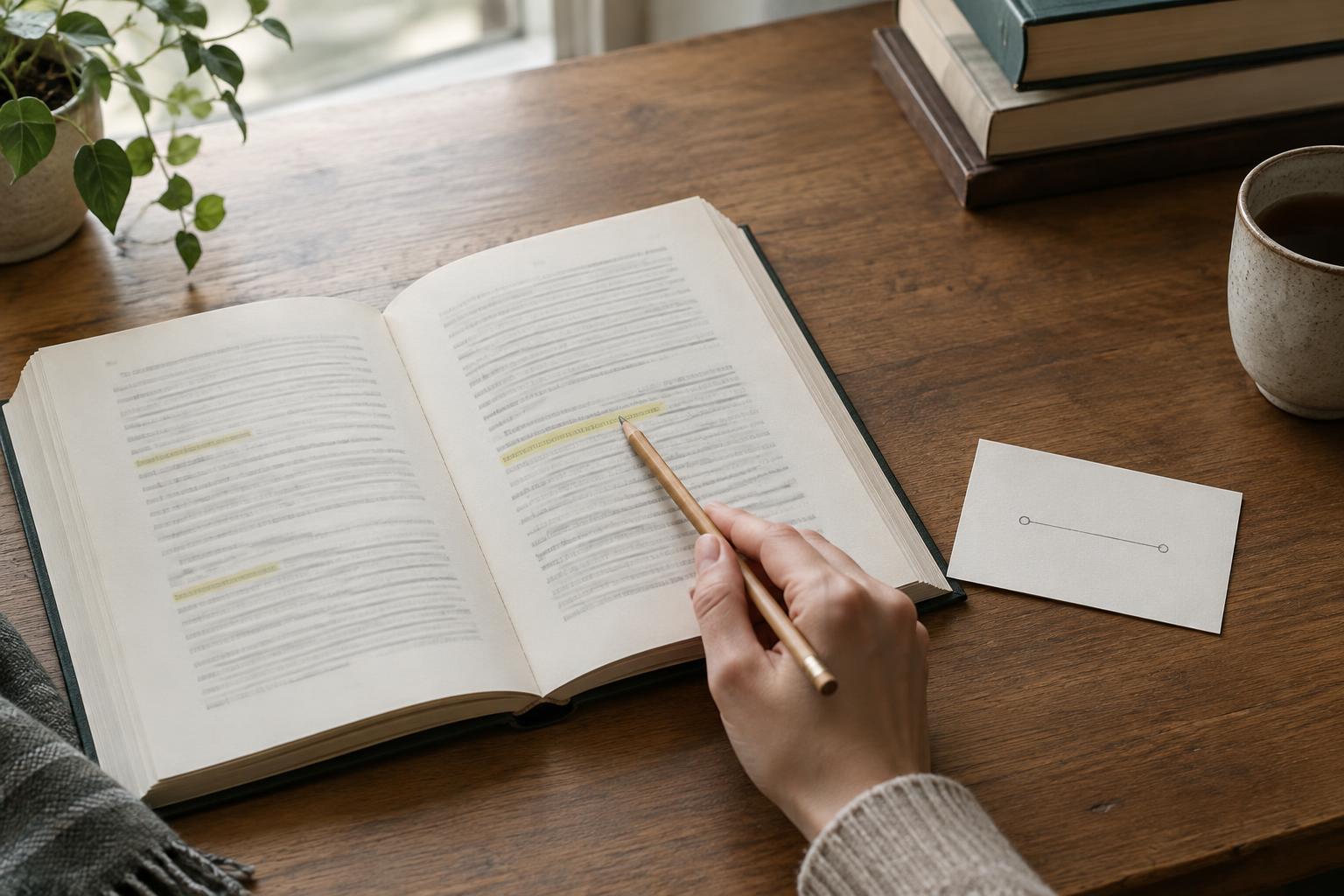
When every sentence is marked, nothing stands out. Before you annotate, decide what you want to understand about the passage. You might ask, “What is the writer’s main claim?” “How does the mood change?” or “Why does this detail appear twice?” A question gives each mark a purpose. It also lets you leave an interesting sentence unmarked when it does not help with the reading task at hand.
Read a short passage once without marking it. Notice what seems important, surprising, or difficult. Then write one question at the top or in the margin and read again with that question in mind. For a long passage, you can choose a new question for each section. Annotation is not a record of everything you noticed; it is a way to keep track of the observations you may want to use.
Mark turning points and telling details
Look for places where something changes: a claim is qualified, an example complicates an earlier idea, a speaker’s attitude shifts, or an image takes on a new meaning. A word such as “but” or “although” may point you toward a turn, but the turn itself matters more than the signal word. Underline the smallest phrase that helps you find it again, then add a short note explaining what changed.
Suppose a passage says, “Mara called the house empty, though the kitchen clock still ticked.” If you are tracking mood, you might mark “clock still ticked” and write “sound makes emptiness uneasy.” You do not need to underline the whole sentence. If you are instead studying Mara’s point of view, you might mark “called the house empty” and ask whether her description fits the details. The same passage can support different annotations because the reader’s question has changed.
Use the margin to explain your marks
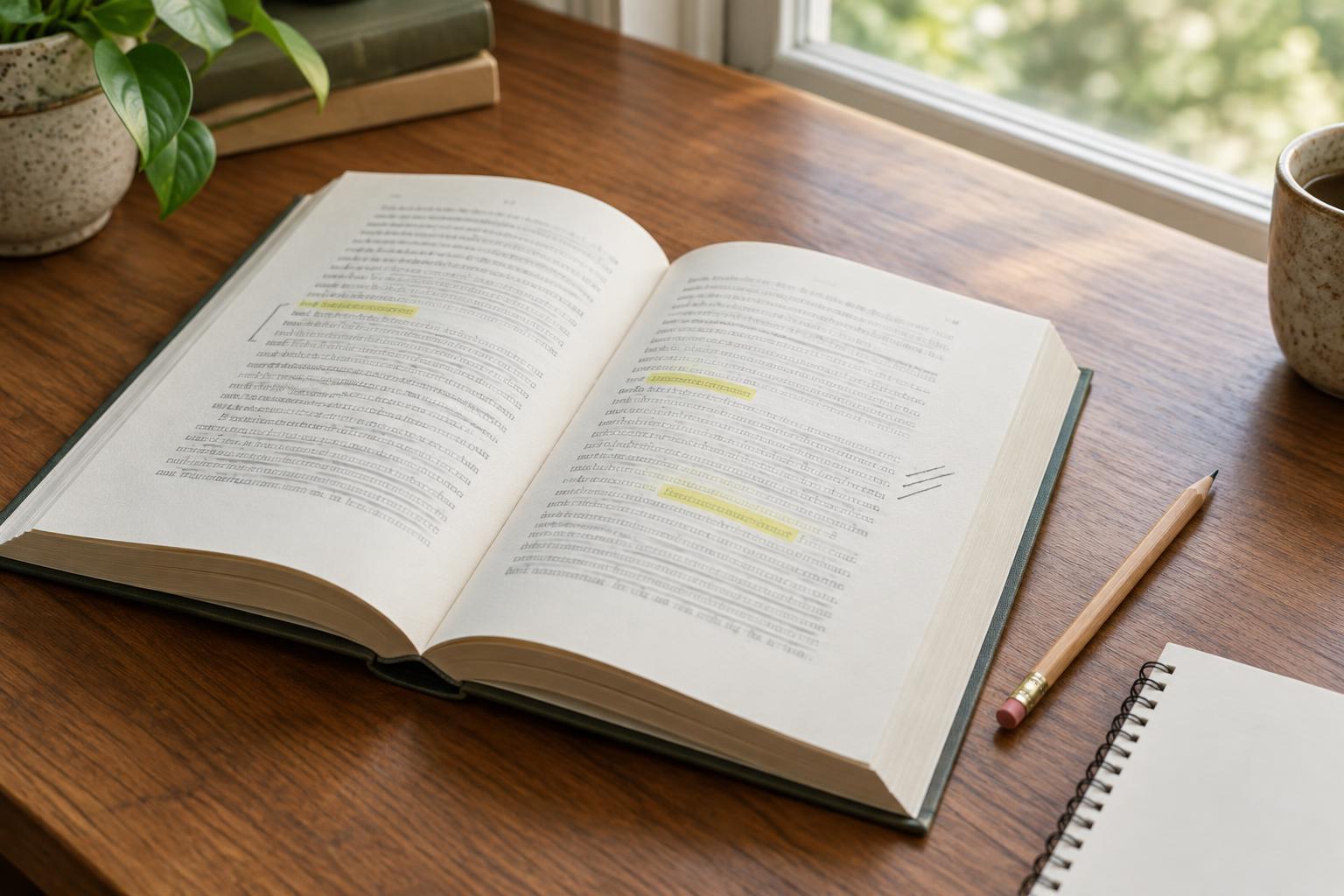
A highlight shows where to look; a margin note shows why. Notes can be brief, but they should say more than “important.” Try a small set of useful moves: paraphrase a difficult claim, name a contrast, connect two details, or write a question you cannot yet answer. “Door described as welcoming here; locked later” will be more useful on a second reading than a line of color with no explanation.
You do not need an elaborate symbol system. A question mark can flag confusion, an arrow can connect related passages, and a short label such as “shift” can identify a change. If symbols save time, use them consistently. If you have to stop and remember what each color or shape means, the system is getting in the way of reading. Words in the margin are often enough.
Leave room for what you learn later
Early guesses are useful, but they are not verdicts. If a sentence puzzles you, mark it lightly and write what you are unsure about: “Who is ‘we’?” or “Is this meant sincerely?” Later lines may answer the question or make it more interesting. You can return to the note, cross out a first impression, or add a second one. A page that shows your thinking changing can be more useful than a page of confident labels.
Try pausing at the end of each paragraph rather than marking as you move through every line. Ask what the paragraph did: introduce a problem, offer an example, challenge an assumption, or move the scene forward. Then choose one detail, if any, worth marking. Some paragraphs may need no marks at all. Blank space is not a sign that you missed something; it can show that you made a choice.
Finish with a short reading note
After annotating, look only at your marks and margin notes. Can you explain the passage’s main movement from them? If not, add a note where the connection is missing rather than highlighting more lines at random. Write two or three sentences beneath the passage: what you think it is doing, which detail most supports that reading, and what remains uncertain. This turns scattered observations into an interpretation you can revisit.
For practice, take one page and allow yourself no more than five marked phrases. Give each one a reason in the margin. The limit is not a rule for every text; it is an exercise in choosing. As you read more closely, you may mark more or less. The aim is the same: when you return to the page, each mark should help you see something, not merely remind you that you read it.