Why the order matters
A finished draft can need several kinds of attention at once. Its opening may not lead to its main point, a sentence may be awkward, and a word may be misspelled. Trying to fix everything in one pass makes it easy to polish a sentence that you later delete. A more useful approach is to work from large decisions to small ones: revise the piece, copyedit the sentences, then proofread the final version.
These stages are not rigid walls. You might notice a typo while revising, or discover during copyediting that a paragraph belongs elsewhere. Fix what is obvious, but keep the purpose of each pass in mind. The question is not simply “Is this correct?” It is “Am I working on the most important problem right now?”
Revision: Make the piece work
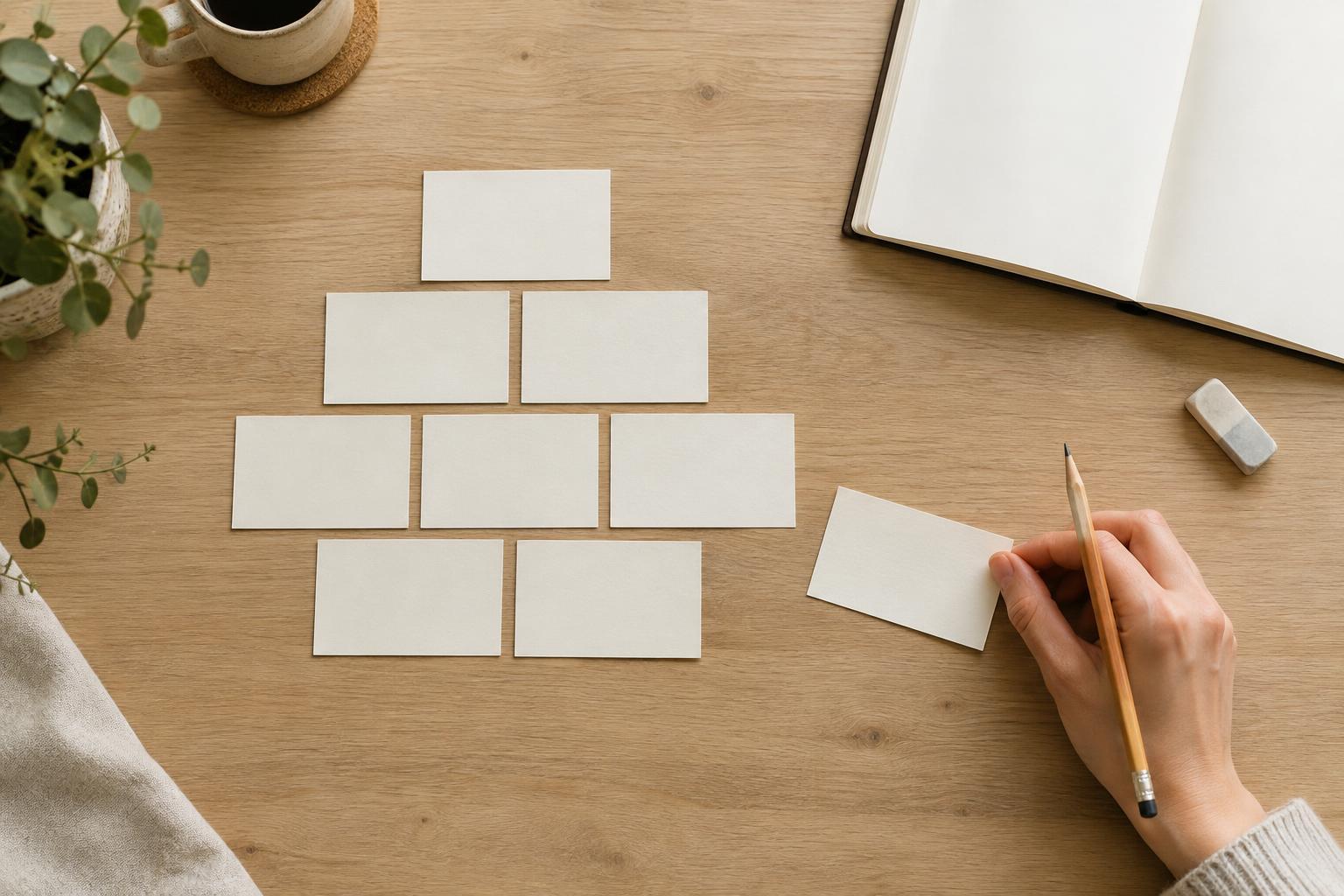
Revision concerns the ideas, structure, and effect of a draft. Before adjusting individual words, state its purpose in one sentence. What should a reader understand, feel, or be able to do by the end? Then read the draft as a whole. Look for missing context, repeated points, unsupported leaps, and sections that do not serve that purpose. If the piece is an explanation, check whether each step arrives when the reader needs it. If it is a story, consider whether each scene changes the situation or deepens our understanding of it.
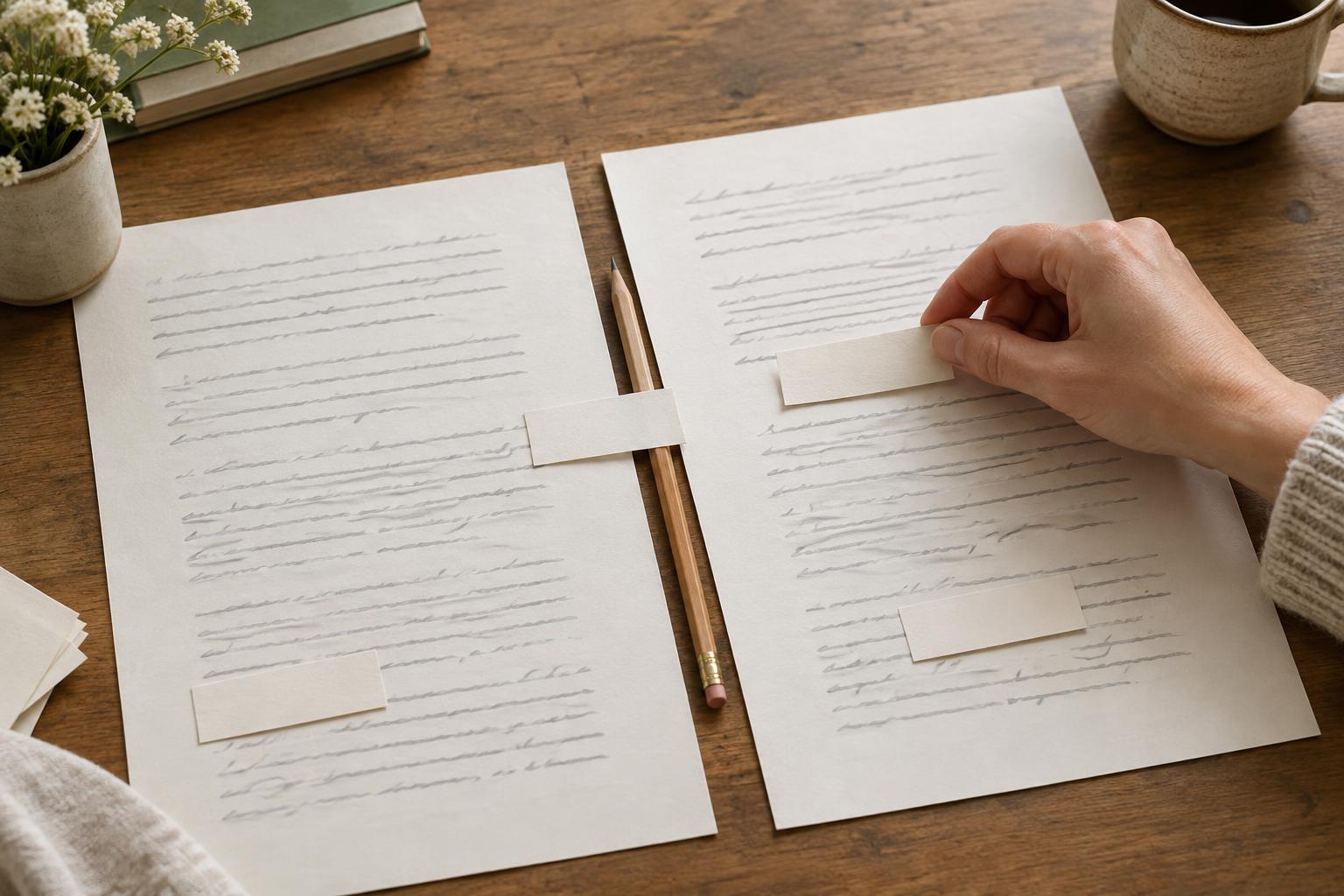
One practical exercise is to write a short note beside each paragraph describing what it does, not just what it says. Notes such as “defines the problem” or “gives an example” reveal the shape of the piece. Two paragraphs with the same job may need combining; a paragraph with no clear job may need cutting. You may also find that the strongest example is buried near the end and would make a better opening.
Revision can feel untidy because it may involve moving or rewriting substantial passages. That is normal. If a draft begins, “Good instructions are important,” but its most useful point is that readers need steps in the order they will perform them, revision might replace the broad opening with a concrete task. The goal is not to preserve every sentence. It is to make the whole piece clearer and more useful.
Copyediting: Make the sentences dependable
Once the structure is sound, copyedit for clarity, grammar, and consistency. Read sentence by sentence, asking whether each one expresses the intended meaning without unnecessary effort from the reader. Replace vague references when their meaning is unclear. Cut repetition that adds no emphasis. Check that lists follow a consistent pattern and that transitions describe the actual relationship between ideas.
For example, “After reviewing the instructions, the form should be completed” makes the form seem to be doing the reviewing. “After reviewing the instructions, complete the form” names the implied reader as the actor. Not every sentence needs to be short or direct, but a reader should be able to tell who is doing what. When you change a sentence, read its neighbors too: a local improvement can create repetition or disturb the flow of a paragraph.
Copyediting also includes choices that may have more than one acceptable answer. If you choose “email” rather than “e-mail,” or favor one form of a recurring term, use it consistently. A brief style note can help with a long piece: record preferred spellings, capitalization, names, and any deliberate exceptions. Consistency supports the reader without requiring every writer to sound alike.
Proofreading: Check what will actually appear
Proofreading is the final check after substantial changes are done. Its focus is surface accuracy: misspellings, missing words, stray punctuation, doubled spaces, inconsistent headings, and errors introduced during the last round of edits. It is also the time to check that a title matches the piece and that any labels or examples appear where they belong. If you rewrite whole paragraphs at this point, you have created new text that needs its own checks.
Read the version that will be shared, not an earlier draft you remember. Changing its appearance, such as reading a printout instead of a screen, may help you notice details you have begun to overlook. Read slowly enough to see the words on the page rather than the words you meant to write. Automated checks can catch some mistakes, but they cannot reliably tell whether a correctly spelled word is the one you intended.
A repeatable editing routine
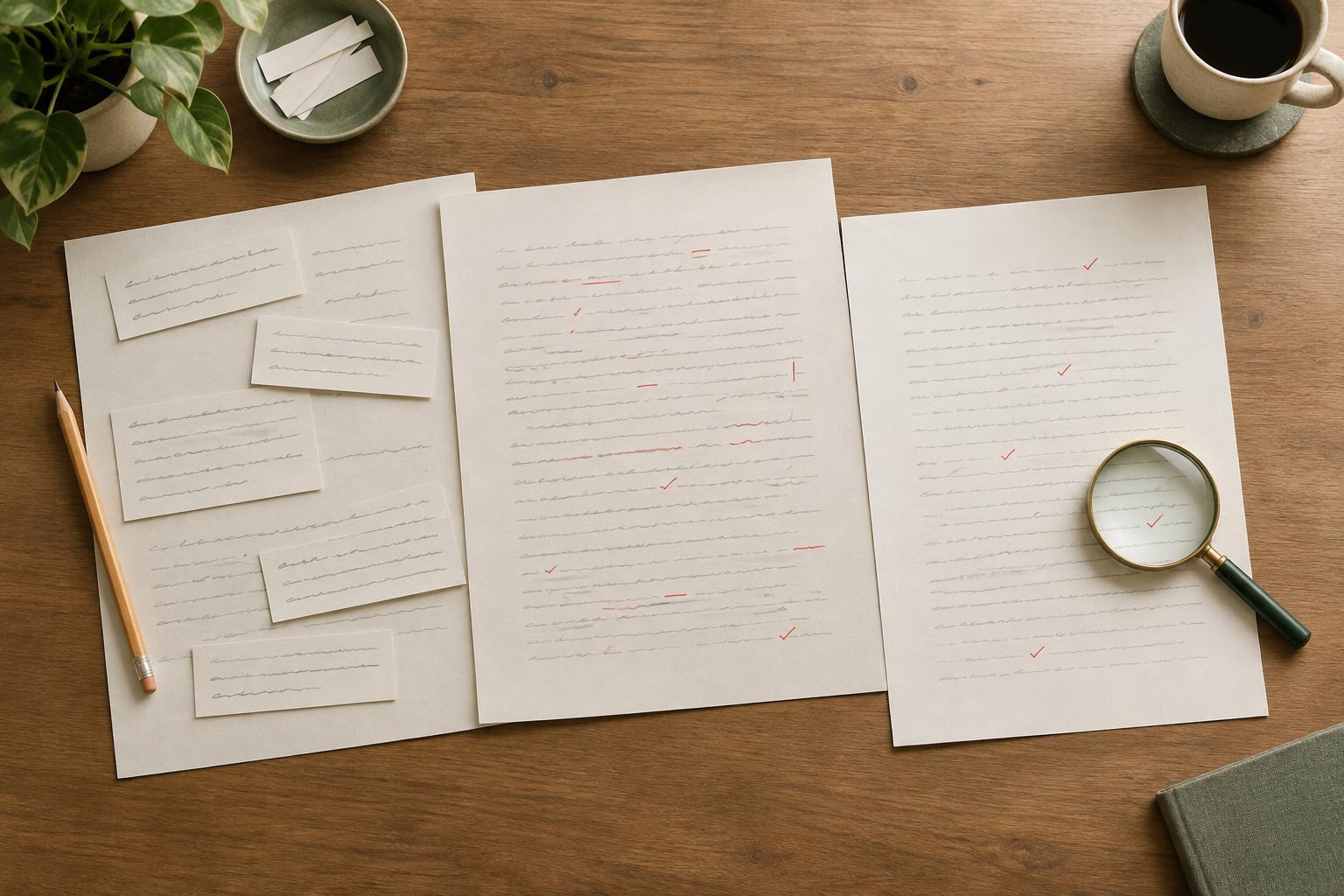
For a manageable piece, try three separate passes. First, read without stopping and note the largest obstacles to understanding. Revise those, then check the structure again. Second, copyedit one paragraph at a time, keeping a short list of style decisions. Third, proofread the final layout, paying particular attention to material changed late in the process.
You do not need to give every draft the same amount of time. A quick personal note may need only a light check; an article intended for readers deserves a fuller sequence. What matters is the order of attention. Make sure the piece says what it needs to say, make the sentences carry that meaning cleanly, and only then inspect the final details.