
Grammar in ContextPronouns keep prose from sounding repetitive, but they can also leave readers guessing. Learn how to spot unclear references, revise them without overusing nouns, and check your own writing with a short exercise.
Read article · 4 min↗

Grammar in ContextParallel structure helps readers see how ideas relate. Learn to spot uneven lists and comparisons, revise them without sounding mechanical, and use a simple read-aloud check when editing.
Read article · 4 min↗
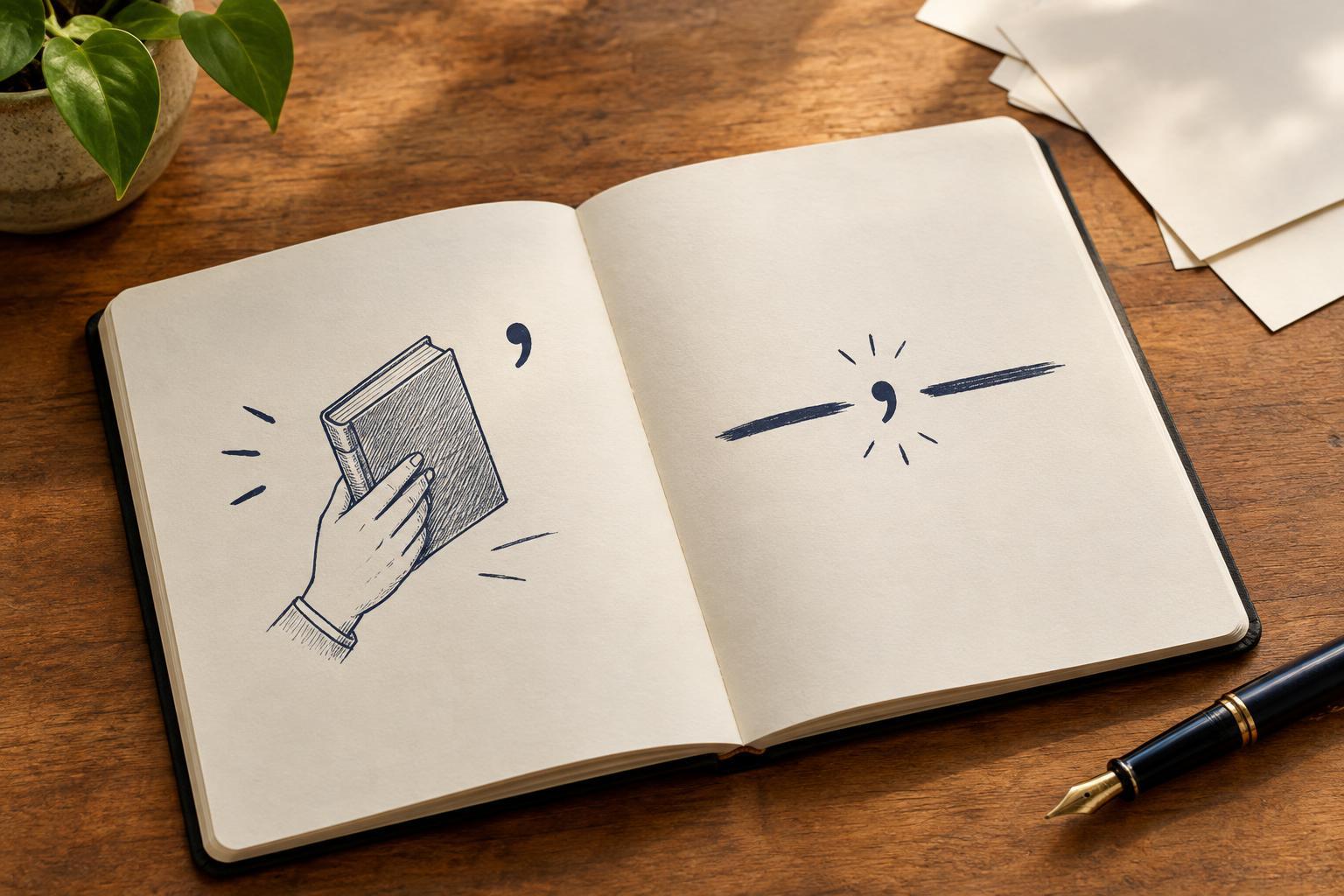
Grammar in ContextAn apostrophe can show possession or mark missing letters, but those two jobs follow different rules. Learn how to form possessives, recognize contractions and check tricky pairs such as its and it’s.
Read article · 3 min↗

Grammar in ContextReported speech often moves a speaker’s words one step into the past, but the shift is not automatic. Learn how to choose a tense that makes the timing and meaning clear.
Read article · 4 min↗

Grammar in ContextWhy does “Where is the library?” become “Do you know where the library is?” Learn the word-order pattern behind direct and indirect questions, with examples and a quick editing exercise.
Read article · 4 min↗

Grammar in ContextWhy do we say “enjoy reading” but “hope to read”? Learn which common verbs take a gerund, which take an infinitive, and how the choice can change the meaning of a sentence.
Read article · 4 min↗

Grammar in ContextChoosing between in, on, and at gets easier when you consider how precisely you are locating an event or object. Learn the common patterns for time and place, see where the patterns bend, and test them with a short editing exercise.
Read article · 4 min↗

Grammar in ContextThe choice between who and whom becomes easier when you look at the job the word does in its own clause. Learn a practical subject-and-object test, see how it works in longer sentences, and decide when a natural-sounding who is the better choice.
Read article · 4 min↗

Grammar in ContextA relative clause can tell readers which person or thing you mean, or add a detail about one they can already identify. Learn how that difference changes meaning and punctuation, then try a short editing exercise.
Read article · 4 min↗

Grammar in ContextThe choice between much and many, or fewer and less, starts with a question: are you counting separate items or measuring an amount? Learn the pattern, the useful exceptions, and a quick way to check your sentences.
Read article · 4 min↗

Grammar in ContextWhy can you count chairs but not furniture? Learn how English treats count and noncount nouns, how context can change a noun’s meaning, and how to choose articles and quantity words that fit.
Read article · 4 min↗
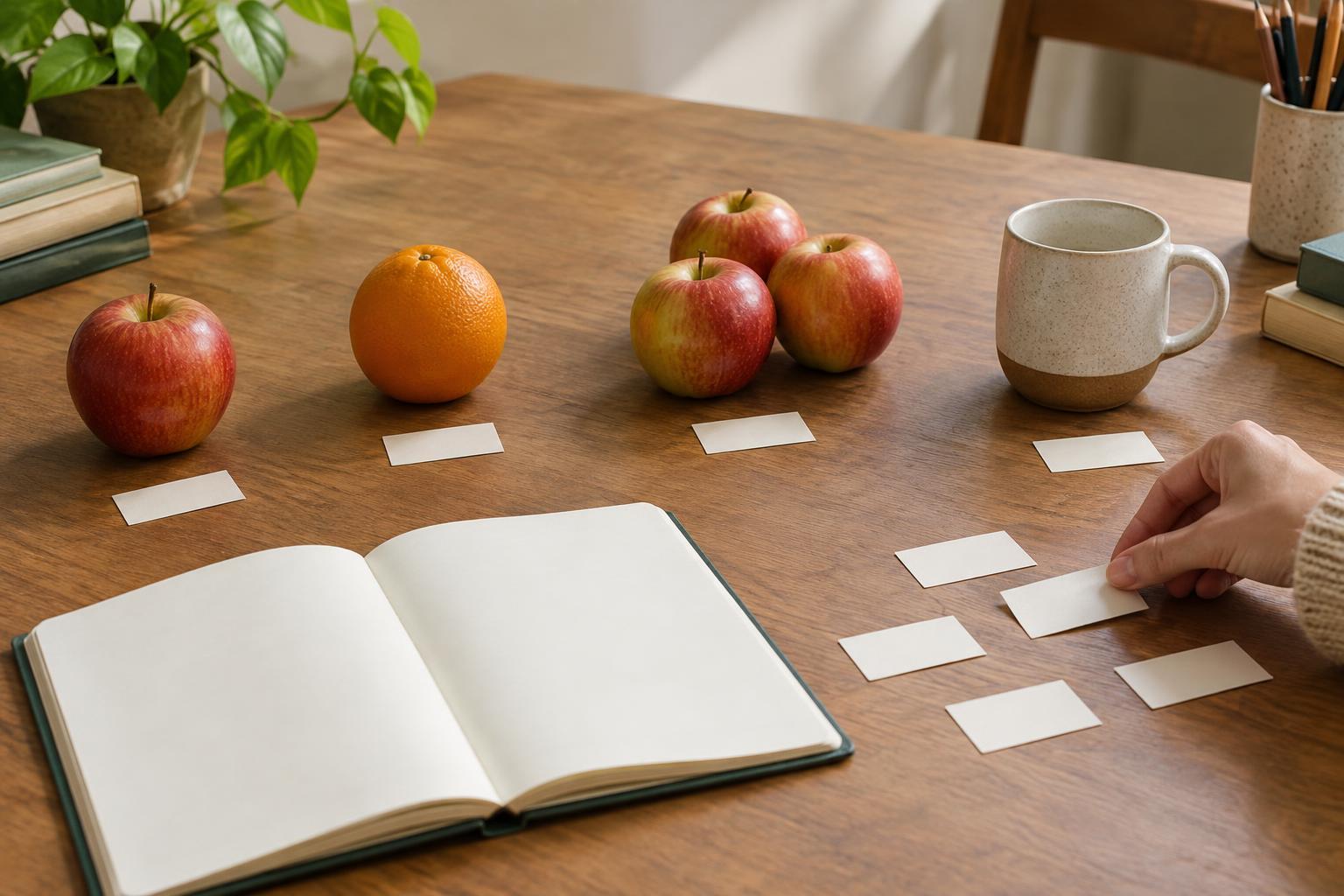
Grammar in ContextEnglish articles are small words with a large job: they help readers tell whether you mean one example, a particular thing, or a whole category. Learn a practical way to choose a, an, the, or no article, with examples and a short editing exercise.
Read article · 4 min↗

Grammar in ContextCan, must, and should do more than change a verb: they show whether someone is able to act, required to act, or being advised to act. Learn how context and negative forms shape their meaning, then try a short editing exercise.
Read article · 4 min↗

Grammar in ContextLearn how English conditionals distinguish open possibilities from imagined situations. Clear examples show when to use present, past, and past perfect forms—and how changing a verb changes the meaning.
Read article · 4 min↗

Grammar in ContextBoth “will” and “going to” can point toward the future, but they often show different ways of thinking about it. Learn how to choose between them when making plans, responding in the moment, and predicting what might happen.
Read article · 4 min↗

Grammar in ContextWhy do we say “I write every morning” but “I’m writing now”? Learn how simple and continuous verb forms shape the meaning of a sentence, with practical examples and a short editing exercise.
Read article · 4 min↗

Grammar in ContextBoth the simple past and the present perfect can describe a completed event. The difference is often what the sentence asks the reader to notice: when it happened, or why it matters now. Learn how time expressions, context, and a few useful questions can guide your choice.
Read article · 4 min↗

Grammar in ContextA long phrase between a subject and its verb can make agreement harder to hear. Learn how to find the subject, ignore distracting words, and check sentences with relative clauses and interrupting phrases.
Read article · 3 min↗

Grammar in ContextA run-on sentence is not necessarily long. The problem is how its independent clauses are connected. Learn to recognize fused sentences and comma splices, then choose among three useful repairs: a coordinating conjunction, a semicolon, or a subordinating word.
Read article · 4 min↗

Grammar in ContextA sentence fragment can look complete while leaving its central thought unfinished. Learn how to spot dependent clauses and phrases, attach them to main clauses, and decide when a deliberate fragment serves your writing.
Read article · 5 min↗

Grammar in ContextA clause contains a subject and a verb, but not every clause can stand alone as a sentence. Learn how independent and dependent clauses combine to show time, cause, contrast, and detail—and how their roles affect punctuation.
Read article · 4 min↗

Grammar in ContextLong sentences become easier to read and revise when you can find their core. Learn how to identify subjects, verbs, and objects, and see why not every sentence needs an object.
Read article · 4 min↗